

Utah is known for its dramatic desert landscapes, world-famous national parks, and year-round outdoor adventures. Located in the western United States, this diverse state is home to the iconic “Mighty 5” national parks, including Zion National Park and Arches National Park, where towering red rock formations and scenic hiking trails attract millions of visitors each year.
Beyond its natural beauty, Utah is also known for its top-rated ski resorts, especially around Park City, which offers some of the best powder skiing in the country. The state has a rich cultural history shaped by early Mormon pioneers, with Temple Square serving as a major historical and religious landmark in Salt Lake City.
From breathtaking national parks and scenic road trips to winter sports and festivals, here’s a full list of everything Utah is famous for.
Facts About Utah
- State nickname: Beehive State
- State capital: Salt Lake City
- State flower: Sego lily
- State bird: California gull
- State tree: Blue spruce
- What Utah is known for: red rock landscapes, Mighty 5 national parks, skiing, outdoor adventure, Mormon heritage, scenic road trips
- Famous places: Zion National Park, Bryce Canyon National Park, Arches National Park, Great Salt Lake, Park City
- Popular foods: fry sauce, funeral potatoes, pastrami burgers, Utah scones, Jell-O desserts
- Major industries: mining, tourism, tech (Silicon Slopes), aerospace, outdoor recreation
- Top companies: Qualtrics, Pluralsight, Ancestry, Nu Skin
- Fun fact: Utah has the greatest snow on Earth, a slogan made famous by its world-class ski resorts
What Food is Utah Known For
Pastrami Burgers
Unlike a traditional hamburger, the pastrami burger is a Utah original that adds a generous layer of thinly sliced pastrami on top of a classic beef patty. This unique twist is believed to have started in Salt Lake City and has since become a staple across the state, especially at local burger joints and fast-casual diners.
Typically served on a toasted bun, the burger is stacked with lettuce, tomato, onions, cheese, and Utah’s famous fry sauce, creating a rich and savory flavor combination. The salty, smoky pastrami pairs surprisingly well with the juicy beef, giving the burger a distinctive taste you won’t find in most other states.
You’ll find pastrami burgers at well-known local spots like Crown Burgers, which helped popularize the dish and remains one of the most iconic places to try it.
Fry Sauce
Few condiments are as closely linked to Utah as fry sauce, a simple yet iconic blend that has become a staple across the state. While it may look like a basic mix of ketchup and mayonnaise, the flavor is richer and slightly tangy, and many local restaurants add their own twist with spices, pickle juice, or barbecue sauce.
The origins of fry sauce are widely credited to Arctic Circle, where it was first popularized in the mid-20th century. From there, it quickly spread throughout Utah and became the default dipping sauce for fries at many burger joints and diners.
You’ll find fry sauce served alongside burgers, fries, onion rings, and even chicken tenders. It pairs especially well with Utah favorites like pastrami burgers, adding a creamy, slightly sweet contrast to the savory flavors.
Funeral Potatoes
A staple of Utah comfort food, funeral potatoes are a creamy, cheesy casserole that’s usually served as a hearty side dish. The dish is especially associated with gatherings organized by members of The Church of Jesus Christ of Latter-day Saints, where it was commonly served at post-funeral meals, giving the dish its memorable name.
Made with hash browns, cheese, sour cream, and a creamy soup base, funeral potatoes are typically topped with a crunchy layer of cornflakes or breadcrumbs and baked until golden.
Despite the name, funeral potatoes are served at far more than just funerals. You’ll often find them at potlucks, holiday dinners, and family gatherings throughout Utah.
Green Jell-O Salad
Green Jell-O salad is one of Utah’s most recognizable and talked-about dishes in Utah. The dessert-style “salad” is typically made with lime-flavored Jell-O, often mixed with ingredients like whipped topping, cream cheese, crushed pineapple, or cottage cheese to create a fluffy, creamy texture.
Utah’s strong association with Jell-O dates back decades, with the state once ranking among the highest consumers of the product in the United States. The dish became especially popular within communities tied to The Church of Jesus Christ of Latter-day Saints, where simple, affordable, and shareable recipes were a staple at gatherings and potlucks.
While Jell-O salad may raise eyebrows for first-time visitors, it remains a nostalgic favorite across Utah and is often served at holidays, family events, and community meals.
Utah Scones
In Utah, “scones” mean something completely different from the crumbly British pastry you might expect. Instead, Utah scones are made from deep-fried dough, creating a soft, fluffy interior with a slightly crisp, golden exterior. They’re closer to fry bread than traditional scones and are typically served warm.
This regional favorite has roots in pioneer cooking traditions, where simple, hearty ingredients were used to create filling meals. It’s often topped with butter and honey butter, or dusted with powdered sugar for a sweet treat. Some versions are even served savory, topped with ingredients like chili, cheese, or deli meats. You’ll commonly find Utah scones at local diners, fairs, and casual restaurants throughout places like Salt Lake City.
What Drink is Utah Known For
Root Beer
Root beer is a popular drink in Utah, especially when served as a float with vanilla ice cream. While it’s enjoyed across the U.S., it stands out more in Utah because of the state’s strong soda shop culture and preference for non-alcoholic drinks.
A big part of its popularity comes from brands like A&W Restaurants, which helped make root beer floats a classic menu item. In Utah, you’ll often find it served at burger spots, drive-ins, and local diners alongside fries and comfort food.
Whether it’s ordered as a cold drink or a creamy float, root beer remains a go-to choice throughout the state.
Cities and Places Utah is Known For
Salt Lake City

Set against the backdrop of the Wasatch Mountains, Salt Lake City is the capital of Utah and the state’s largest city. It’s known for its easy access to outdoor activities, with several major ski resorts located less than an hour away, making it a popular base for winter sports.
The city also played a global role as the host of the 2002 Winter Olympics, which helped put it on the map as a top destination for skiing and snowboarding. At the center of downtown is Temple Square, one of Utah’s most visited landmarks and the headquarters of The Church of Jesus Christ of Latter-day Saints.
In addition to its history, Salt Lake City offers a growing food scene, local breweries, and a mix of museums, shops, and outdoor spaces. With mountains in every direction and plenty to do year-round, it’s often the starting point for exploring the rest of Utah.
Park City
Tucked into the mountains just east of Salt Lake City, Park City is one of Utah’s top destinations for both winter and summer travel. It’s best known for its ski resorts, including Park City Mountain and Deer Valley Resort, which draw visitors from around the world each year.
The town gained international attention when it hosted events during the 2002 Winter Olympics, and it continues to attract skiers and snowboarders with its reliable snowfall and well-developed slopes. When the snow melts, the area shifts into hiking, mountain biking, and scenic lift rides, making it a year-round destination.
Park City is also home to the Sundance Film Festival, one of the largest independent film festivals in the country. Along Main Street, you’ll find historic buildings, restaurants, galleries, and shops that reflect the town’s mining past while giving it a lively, modern feel.
Bryce Canyon National Park
Known for its unusual rock formations, Bryce Canyon National Park stands out as one of the most unique landscapes in Utah. Instead of a single canyon, the park is made up of a series of natural amphitheaters filled with hoodoos, which are tall, thin spires of rock shaped by erosion over time.
The colors here shift throughout the day, with shades of red, orange, and white becoming especially vivid at sunrise and sunset. Popular viewpoints like Sunrise Point and Sunset Point give you a clear look over the formations, while hiking trails such as the Navajo Loop take you down into the hoodoos for a closer experience.
Bryce Canyon also has some of the darkest skies in the country, making it a great place for stargazing. With its compact layout and easy access to viewpoints, it’s one of the more approachable national parks in Utah, even if you’re short on time.
Zion National Park
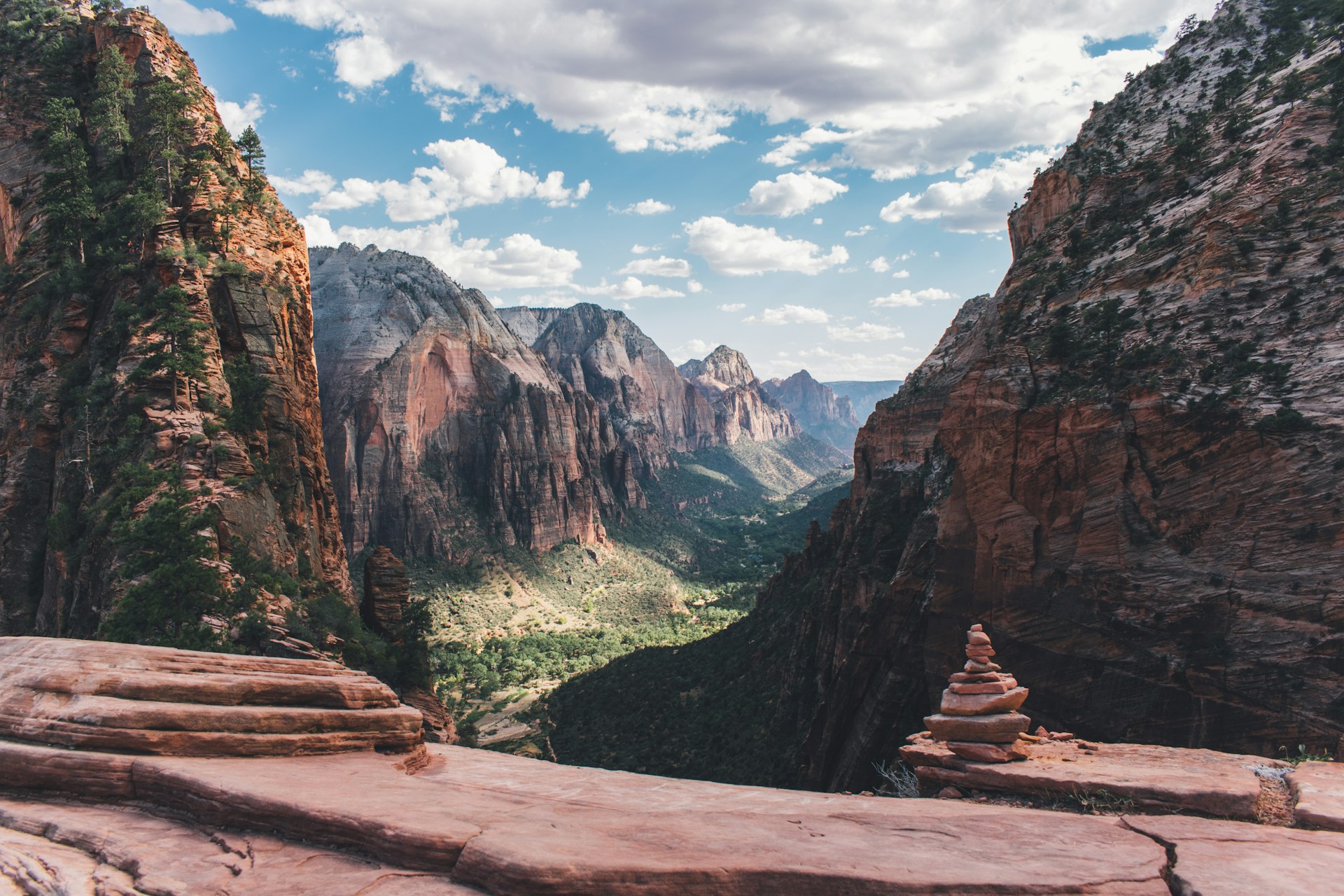
One of the most visited parks in the state, Zion National Park is known for its massive red rock cliffs, narrow canyons, and scenic river views. The landscape was carved by the Virgin River, creating steep walls and dramatic views that make it one of the most recognizable places in Utah.
Hiking is a big draw here, with well-known trails like Angels Landing and The Narrows offering very different experiences. Angels Landing climbs along a narrow ridge with steep drop-offs, while The Narrows takes you through the river between towering canyon walls. Both are challenging but popular with visitors looking for something more adventurous.
Zion is also easy to explore thanks to its shuttle system, which runs through the main canyon for most of the year. With a mix of short walks, longer hikes, and scenic viewpoints, it’s a park that works for all types of travelers and is often a highlight of any trip to Utah.
Moab
Sitting in eastern Utah, Moab is one of the best places in the state for outdoor adventure. It’s surrounded by red rock desert and acts as the main gateway to both Arches National Park and Canyonlands National Park, making it a popular base for exploring some of Utah’s most famous landscapes.
The area is known for its natural rock formations, including Delicate Arch and Balanced Rock, along with wide open views that stretch for miles. Hiking, mountain biking, rock climbing, and off-roading are all big here, with trails ranging from beginner-friendly to more advanced routes. The nearby Colorado River also adds options like rafting and kayaking.
Moab has a small-town feel but stays busy thanks to tourism, especially in spring and fall. With easy access to multiple parks and a wide range of outdoor activities, it’s one of the most action-packed destinations in Utah.
Monument Valley
Straddling the border of Utah and Arizona, Monument Valley is one of the most recognizable landscapes in the American Southwest. The area is known for its massive sandstone buttes and wide desert views, many of which have been featured in movies, TV shows, and commercials.
The valley sits within the Navajo Nation and is managed as a tribal park, adding cultural importance alongside its natural scenery. Visitors can explore the area through a scenic drive or guided tours, which often include stops at viewpoints, rock formations, and historic sites.
With its open space, towering rock formations, and quiet desert setting, Monument Valley offers a very different experience compared to Utah’s national parks. It’s less about hiking trails and more about taking in the landscape, making it a memorable stop on any Southwest road trip.
Arches National Park
Home to more than 2,000 natural sandstone arches, Arches National Park is one of the most recognizable landscapes in Utah. Located just outside Moab, the park is known for its red rock formations, wide desert views, and easy access to many of its top sights.
Some of the most famous landmarks include Delicate Arch, Landscape Arch, and Balanced Rock. Many of these can be reached by short hikes or quick stops along the park’s scenic drive, making it a good option even if you’re short on time.
The park’s colors shift throughout the day, with sunrise and sunset offering the best lighting for photos. With its high concentration of natural arches and simple layout, Arches is one of the easiest national parks in Utah to explore in a single day.
Landmarks and Attractions Utah is Known For
5 National Parks
Utah is famous for its five national parks, often called the “Mighty 5,” which showcase some of the most diverse landscapes in the country. These parks include Arches National Park, Bryce Canyon National Park, Canyonlands National Park, Capitol Reef National Park, and Zion National Park.
Each park offers something different. Arches is known for its natural stone arches and desert scenery, while Bryce Canyon stands out for its hoodoos, or tall rock spires shaped by erosion. Canyonlands features deep canyons carved by the Colorado and Green Rivers, and Capitol Reef is known for its cliffs, domes, and the long ridge called the Waterpocket Fold. Zion, the most visited of the five, is famous for its towering red cliffs, narrow canyons, and well-known hiking trails.
Together, the Mighty 5 attract millions of visitors each year and are a big reason why Utah is considered one of the best states for national park travel. Many travelers plan road trips to see all five, often starting in places like Moab or Springdale, which are located near several of the parks.
Great Salt Lake
Just northwest of Salt Lake City, the Great Salt Lake is the largest saltwater lake in the Western Hemisphere. Its high salinity means you can float easily on the surface, similar to the Dead Sea.
The lake is what remains of ancient Lake Bonneville, which once covered much of the region thousands of years ago. Today, it’s an important habitat for millions of migratory birds, making it a popular spot for birdwatching.
Visitors can explore areas like Antelope Island, where you might see bison, hike trails, or take in wide views of the lake. With its unusual water, open landscape, and easy access from the city, the Great Salt Lake is one of Utah’s most distinctive natural features.
Bonneville Salt Flats
Stretching across western Utah, the Bonneville Salt Flats form a wide, flat landscape covered in a bright white crust of salt. The area was once part of an ancient lake, and over time, evaporation left behind the smooth, reflective surface seen today.
The flats are best known as a site for land speed records, where drivers test high-speed vehicles on the hard, open terrain. It’s also a popular spot for photography, especially after rain, when a thin layer of water creates mirror-like reflections across the surface.
Located about 1.5 hours west of Salt Lake City, the Bonneville Salt Flats are easy to visit and don’t require much time to explore. The simple, open landscape makes it one of the most unique and unexpected sights in Utah.
Dinosaur National Monument
Straddling the border of Utah and Colorado, Dinosaur National Monument is one of the best places in the country to see dinosaur fossils in their original setting. The main highlight is the Quarry Exhibit Hall, where more than 1,500 fossils are still embedded in a rock wall.
Beyond the fossils, the monument covers a large area of canyons, rivers, and desert landscape. The Green and Yampa Rivers run through the park, creating opportunities for rafting, fishing, and scenic views along the canyon walls.
Petroglyphs and pictographs can also be found throughout the area, adding another layer of history to the site. With a mix of paleontology and outdoor scenery, Dinosaur National Monument offers a very different experience compared to Utah’s national parks.
Temple Square
Right in the center of Salt Lake City, Temple Square is one of the most visited sites in Utah. The 10-acre complex is the headquarters of The Church of Jesus Christ of Latter-day Saints and draws millions of visitors each year.
The area includes several notable buildings, such as the Salt Lake Temple, the Tabernacle, and the Assembly Hall, along with landscaped gardens and walkways. While the temple itself is not open to the public, other parts of the square can be explored, and free tours are available.
Throughout the year, Temple Square hosts concerts, events, and seasonal displays. It’s especially busy during the holidays, when the grounds are decorated with lights, making it a popular stop for both visitors and locals.
Utah Olympic Park
Built for the 2002 Winter Olympics, Utah Olympic Park is one of the state’s top sports and training facilities. Located near Park City, the park was used for events like ski jumping, bobsled, and Nordic combined during the games.
Today, it’s still an active venue where athletes train and compete, but it’s also open to visitors. You can watch ski jumpers practice, visit the on-site museum, or try activities like ziplining and the alpine slide in the summer.
In winter, the park continues to host events and offers experiences tied to Olympic sports. It’s one of the few places where you can see these events up close, making it a unique stop for anyone interested in sports or the Olympics.
Utah State Capitol
Overlooking downtown Salt Lake City, the Utah State Capitol is one of the most recognizable buildings in the state. Completed in 1916, it’s built from Utah granite and designed in a neoclassical style, with a large dome that’s often compared to the U.S. Capitol.
The building serves as the center of Utah’s government, housing the offices of the governor and state legislature. Inside, you’ll find murals, marble columns, and a rotunda, along with exhibits that highlight the state’s history.
Visitors can explore the capitol on their own or join a free guided tour. The grounds also offer wide views of the city and surrounding mountains, making it a popular stop for both history and sightseeing.
History, Culture and Activities Utah is Known For
Mormons
Utah is closely associated with The Church of Jesus Christ of Latter-day Saints, often referred to as the Mormon Church. Members of the church first arrived in the area in 1847, led by Brigham Young, and played a major role in settling and developing the region.
Today, Utah has the highest percentage of church members in the United States, and their influence can still be seen in many aspects of daily life, from community events to local culture. Temple Square in downtown Salt Lake City serves as the church’s headquarters and is one of the most visited sites in the state.
Skiing and Ski Resorts
Utah is known for its skiing, with light, dry snow that’s often described as some of the best in the country. The Wasatch Mountains, just outside Salt Lake City, are home to many of the state’s top resorts, making it easy to go from the city to the slopes in under an hour.
Popular ski areas include Park City Mountain, one of the largest ski resorts in the U.S., and Deer Valley Resort, known for its well-groomed runs and upscale experience. Other resorts like Snowbird and Alta are especially popular for deep powder and more advanced terrain.
The ski season usually runs from late November through early spring, depending on snowfall. With a mix of beginner slopes, challenging runs, and reliable conditions, Utah has become one of the top destinations for skiing and snowboarding in North America.
Sundance Film Festival
Every January, Park City turns into a hub for filmmakers, actors, and movie fans during the Sundance Film Festival. It’s one of the largest independent film festivals in the world and draws thousands of visitors to Utah each year.
The festival was founded in 1978 and later gained major attention with support from actor Robert Redford, who helped grow it into an internationally recognized event. Today, it’s known for showcasing new films, documentaries, and emerging talent before they reach wider audiences.
Screenings, premieres, and industry events take place across Park City and nearby areas, creating a busy and energetic atmosphere. For a few weeks each year, Sundance puts Utah at the center of the film world.
Strict Alcohol Laws
Alcohol laws in Utah are stricter than in many other states, and that often surprises first-time visitors. The rules are shaped in part by the state’s history and the influence of The Church of Jesus Christ of Latter-day Saints, which discourages alcohol consumption among its members.
One key difference is that liquor and higher-strength beer are sold only in state-run stores, rather than regular grocery or convenience stores. Bars and restaurants also follow specific rules, such as ID requirements for entry in some cases and limits on how drinks are served.
Over the years, some of these laws have been updated, making alcohol more accessible than it once was. Still, Utah maintains tighter regulations compared to most states, and it’s something visitors often notice when ordering drinks or buying alcohol.
The Marriotts
Utah is closely connected to one of the biggest names in the hotel industry, the Marriott family. J. Willard Marriott founded what would become Marriott International, one of the largest hotel chains in the world.
The company started in Washington, D.C. as a small root beer stand in 1927, but the Marriott family has deep roots in Utah and has remained closely tied to the state. Over time, the business expanded into hotels and grew into a global brand with thousands of properties worldwide.
Today, the Marriott name is recognized around the world, with more than 8,000 hotels and properties across over 130 countries and territories.
First Electric Traffic Light

Utah is credited with installing one of the first electric traffic signals in the United States, marking an early step in modern traffic control. In 1912, a signal was set up in downtown Salt Lake City to help manage the increasing number of automobiles on the road.
As cars became more common, cities needed better ways to control traffic and improve safety at busy intersections. The electric signal helped direct both drivers and pedestrians, making travel through the city more organized.
Although traffic lights quickly became standard across the country, this early system highlights how Salt Lake City was adapting to new technology at the time.
Beehive State
Utah’s nickname, the Beehive State, reflects the idea of hard work and community. The symbol comes from early settlers, particularly members of The Church of Jesus Christ of Latter-day Saints, who used the beehive to represent cooperation and productivity as they built communities across the region.
You’ll see the beehive symbol throughout Utah today, including on the state flag, road signs, and government buildings.
The nickname dates back to the 1800s, when Utah was briefly proposed to be called the State of Deseret, a word that also meant “honeybee.” While the name didn’t stick, the symbol did, and it remains closely tied to how Utah presents itself today.
Winter Olympics
Utah gained international attention when Salt Lake City hosted the 2002 Winter Olympics, bringing athletes and visitors from around the world to the state. The event took place from February 8 to 24, 2002, and included around 2,400 athletes from 78 countries competing in 78 events.
Many of the venues built for the Olympics are still in use today, especially around Park City and the Wasatch Mountains. Places like the Utah Olympic Park continue to host training, competitions, and public activities, helping keep Utah’s winter sports scene active year-round.
The games also helped establish Utah as a major skiing destination. With reliable snowfall and well-developed resorts, the state is now known for having some of the best ski conditions in the country. Salt Lake City has even been selected to host the Winter Olympics again in 2034, showing how strong its reputation remains.
Dutch Oven

Cooking outdoors is very popular in Utah and Dutch oven meals are a common sight at campsites and gatherings across the state. A Dutch oven is a heavy cast-iron pot, usually placed over hot coals, that can be used to cook everything from main dishes to desserts.
This style of cooking became popular during the pioneer era, when early settlers needed simple, reliable ways to prepare meals while traveling or living off the land. Today, it’s still widely used for camping trips, group events, and outdoor cookouts throughout Utah.
Meals cooked in a Dutch oven often include dishes like stews, chili, roasted meats, and even cobblers or cakes. The slow, even heat helps bring out rich flavors, making it a go-to method for hearty, filling food.
Dinosaur Fossils
Long before it became a travel destination, Utah was home to dinosaurs, and the state is still one of the best places in the U.S. to see their remains today. Dinosaur National Monument is the most well-known site, where visitors can view over 1,500 dinosaur fossils embedded directly in a rock wall.
The monument sits along the Utah–Colorado border and combines paleontology with outdoor scenery. In addition to the fossil exhibits, the area features deep canyons carved by the Green and Yampa Rivers, along with hiking trails, scenic drives, and opportunities for rafting.
Utah’s desert landscape has helped preserve these fossils for millions of years, making the state an important location for dinosaur discoveries. For visitors, it’s one of the few places where you can see real fossils still in place, rather than just in a museum display.
Famous People from Utah
- Donny Osmond – Singer, dancer, and TV personality born in Ogden, Utah, who rose to fame with the Osmond family and later became a successful solo artist.
- Marie Osmond – Country singer and entertainer born in Ogden, Utah, best known for her music career and co-hosting Donny & Marie.
- Roseanne Barr – Emmy-winning comedian and actress born in Salt Lake City, Utah, famous for her hit sitcom Roseanne.
- Brandon Flowers – Lead singer of The Killers, born in Henderson, Nevada, but raised in Nephi, Utah, and known for global hits like “Mr. Brightside.”
- Post Malone – Chart-topping artist born in Syracuse, New York, who spent part of his childhood in Utah before rising to international fame.
- Jewel – Grammy-nominated artist born in Payson, Utah, known for her folk-pop style and songs like “You Were Meant for Me.”
- Derek Hough – Emmy-winning dancer and choreographer born in Salt Lake City, Utah, known for multiple wins on Dancing with the Stars.
- Julianne Hough – Dancer, actress, and singer born in Orem, Utah, who gained fame on Dancing with the Stars and in films like Footloose.
- Aaron Eckhart – Film actor born in Cupertino, California, but raised in Utah, known for roles in The Dark Knight.
- Katherine Heigl – Actress born in Washington, D.C., who spent part of her youth in Utah and rose to fame on Grey’s Anatomy.
- Jon Heder – Actor born in Fort Collins, Colorado, but raised in Salem, Utah, and known for Napoleon Dynamite.
- Stephenie Meyer – Bestselling author born in Hartford, Connecticut, and raised in Phoenix, Arizona, with strong ties to Utah through education and residency.
- David Archuleta – Singer born in Miami, Florida, but raised in Murray, Utah, where he began his music career.
- Steve Young – Hall of Fame NFL quarterback born in Salt Lake City, Utah, who led the San Francisco 49ers to a Super Bowl victory.
- Mitt Romney – U.S. Senator born in Detroit, Michigan, who later became a prominent political figure representing Utah.
FAQs About What Utah is Known For
Utah is known for producing natural resources like copper, gold, and silver, along with coal and natural gas. The state is also a major producer of salt, thanks to the nearby Great Salt Lake. In addition, Utah has a growing economy in technology, aerospace, and outdoor recreation products.
Utah’s nickname is the “Beehive State,” which represents industry, hard work, and community. The beehive symbol dates back to early Mormon settlers and is still featured on the state flag.
Utah is known for unique regional favorites like fry sauce, a popular ketchup and mayonnaise blend served with fries. Other local staples include funeral potatoes, pastrami burgers, and scones (which in Utah are more like fried bread). The state also has a growing food scene, especially in Salt Lake City.
Utah is home to a fast-growing tech hub often called the “Silicon Slopes.” Major companies based in the state include Qualtrics, Pluralsight, Ancestry, and Nu Skin. Outdoor brands like Black Diamond Equipment are also headquartered in Utah.
Utah is famous for its diverse landscapes, including deserts, mountains, and canyons. With five national parks, countless hiking trails, and world-class ski resorts, it’s one of the best states in the U.S. for outdoor adventure year-round.
Utah is best known for its stunning national parks, red rock scenery, skiing, and strong outdoor culture. It also stands out for its unique history, growing tech industry, and distinct local traditions.
Utah is known for its early settlement by members of The Church of Jesus Christ of Latter-day Saints in 1847, along with its mining history and Native American heritage.
Utah is known for animals like bison (found near the Great Salt Lake), elk, mule deer, mountain goats, and predators like coyotes and mountain lions.
Utah is best known for The Church of Jesus Christ of Latter-day Saints, which has a strong presence in the state and is headquartered at Temple Square in Salt Lake City.
