

Bali is one of those places that almost doesn’t need an introduction. You’ve probably seen it all over Instagram – jungle swings, endless rice fields, beach clubs at sunset – but there’s a reason it’s stayed so popular for so long. It really does have a bit of everything.
Bali is often called “The Island of the Gods” and is known for its Hindu culture, terraced rice fields, and sea temples set along the coast.
I actually lived in Bali for a year, and while it definitely has its downsides, I love how varied the island is. One minute you’re in a laid-back beach town like Canggu, sipping something cold after a surf, and the next you’re wandering through temples or standing in the middle of bright green rice terraces in Ubud. It never feels one-dimensional.
There’s also this strong sense of culture that you notice right away. Daily offerings on the sidewalks, the smell of incense in the air, traditional ceremonies happening when you least expect them. It isn’t just a pretty destination – it’s a highly spiritual place with lots of temples and festivals going on.
Bali is also a popular destination for surfing, yoga retreats, and wellness, with a slower pace of life that somehow makes you want to stay longer than planned.
Let’s get into all the things Bali is known for.
Bali at a Glance
- Location: Indonesia, Southeast Asia
- Best Time to Visit: May to October (dry season)
- Currency: Indonesian Rupiah (IDR)
- Language: Bahasa Indonesia (English is widely spoken in tourist areas)
- Time Zone: GMT+8
- Known For: Beaches, temples, rice terraces, surfing, and digital nomad life
- Popular Areas: Canggu, Seminyak, Ubud, Uluwatu, Nusa Penida
- Getting Around: Scooter, private driver, or ride-hailing apps like Grab and Gojek
- Vibe: A mix of laid-back beach life, spiritual culture, and modern hotspots
Food and Drink Bali is Known For
Babi Guling

Babi Guling is essentially a whole pig that’s been stuffed with a mix of spices like turmeric, lemongrass, garlic, and chili, then slow-roasted over an open fire. The result is that perfect contrast – super crispy skin on the outside and really tender, flavorful meat underneath.
You’ll usually get it served with rice, a few sides, and sometimes a bit of spice depending on where you order it. It’s one of those meals that looks a bit chaotic on the plate, but everything just works together. I used to eat this nearly every day for lunch from a roadside food stand in Seminyak, and it always hit the spot. Very spicy too!
Babi Guling is often eaten by locals for ceremonies and special occasions, so it’s not just another tourist dish. If you eat pork, it’s definitely something you should try at least once while you’re in Bali.
Mie Goreng

Mie Goreng is one of those dishes you’ll end up ordering again and again without even thinking about it.
It’s a simple stir-fried noodle dish, but somehow it always hits the spot. You’ve got egg noodles tossed with vegetables, usually some kind of protein like chicken or shrimp, and a sweet-salty sauce that’s hard to pin down but really addictive. Most places top it with a fried egg, which just makes it even better.
What I like about it is how reliable it is. Whether you’re grabbing a quick meal at a local warung or ordering room service after a long day out, it’s always a safe bet. It’s filling, cheap, and comes out fast.
If you’re not sure what to order when you first arrive in Bali, start with Mie Goreng.
Gado Gado
If you’re vegetarian, you’ll definitely want to try Gado Gado – a classic Indonesian dish that shows up all over Bali.
It’s made with a mix of vegetables, tofu, tempeh, and boiled eggs, all covered in a rich peanut sauce. The sauce is really the star here – slightly sweet, a little savory, and thick enough to coat everything properly.
You’ll often see it topped with crispy shallots or served with prawn crackers for a bit of crunch. This dish is simple and light, but the mix of textures and flavors works really well together.
Nasi Campur
Nasi campur is a simple rice dish, but it’s one of the most interesting things to eat in Bali. It’s basically a plate of rice served with a mix of different sides, which can include meats, vegetables, sambal, and sometimes a boiled egg.
What you get can vary quite a bit depending on where you order it. At a local warung, you’ll often point to what you want from a display, and they’ll build your plate on the spot. Other places might have a set version, but even then, it rarely feels repetitive.
No two plates are exactly the same and you get a bit of everything in one meal. A little spice, something savory, maybe something slightly sweet, all mixed together. It’s an easy way to try a few different flavors without having to order multiple dishes.
Balinese Coffee & Kopi Luwak

Balinese coffee, often just called kopi, is typically strong, thick, and unfiltered.
The coffee is usually made by pouring hot water directly over finely ground beans, letting the grounds settle at the bottom of the cup rather than using a filter. This gives it a heavier texture and a more intense flavor compared to what you might be used to.
Most of the beans grown in Bali are robusta, which naturally have a bolder, slightly more bitter taste. Sugar is often added, balancing it out and creating a slightly sweet finish.
Coffee is a big part of daily life on the island, and it’s commonly served alongside breakfast or as a simple break during the day.
Bintang Beer

If you’re ordering a beer in Bali, chances are it’ll be Bintang. It’s the local go-to, and you’ll find it pretty much anywhere that serves alcohol.
This light lager has a smooth, slightly malty taste and a crisp finish. The flavor is mild and easygoing, which makes it well suited to the heat and humidity on the island.
You’ll usually see it served ice cold, either straight from the bottle or poured into a glass. It’s produced locally and has become a staple across bars, restaurants, and beach clubs throughout Bali.
The red star logo is hard to miss, and for many people, it ends up being closely associated with the overall Bali experience.
Satay Lilit

Unlike typical satay, Satay Lilit isn’t made with chunks of meat on skewers.
Instead, minced meat, often fish, is mixed with grated coconut, coconut milk, and a blend of spices, then wrapped around a stick. Traditionally, it’s shaped onto lemongrass or bamboo rather than pierced through like standard satay.
The mixture is then grilled, giving it a slightly smoky flavor while keeping the inside soft and fragrant. The coconut adds a subtle sweetness, which balances out the spices.
It’s a distinctly Balinese take on satay, with a softer texture and a more aromatic flavor profile than the versions found elsewhere in Southeast Asia.
Jimbaran Seafood
Along the coast in Jimbaran, seafood is all about simplicity and freshness.
Restaurants line the beach, displaying the day’s catch out front – everything from fish and prawns to crab and lobster. Once you choose what you want, it’s typically grilled over coconut husks, which adds a subtle smoky flavor.
The dishes are usually served with rice, vegetables, and a range of sambal sauces, bringing in heat and acidity to balance the richness of the seafood.
What sets it apart is less about complex preparation and more about the setting and the quality of the ingredients, with the focus kept on freshly cooked seafood right by the water.
Places Bali is Known For
Ubud

Set inland and surrounded by jungle, Ubud is often described as the cultural center of Bali.
The area is known for its rice terraces, temples, and a strong connection to traditional arts. Painting, wood carving, and dance all play a big role here, and you’ll see that reflected in local galleries, workshops, and performances throughout the town.
The landscape is a big part of what defines Ubud. Just outside the main streets, you’ll find dense greenery, river valleys, and layered rice fields that feel a world away from the busier coastal areas.
It’s also a place where daily rituals are more visible, with offerings placed outside homes, shops, and temples as part of everyday life.
Seminyak

On Bali’s southwest coast, Seminyak leans more polished and built-up than some of the island’s other beach areas.
It’s known for its mix of upscale resorts, beach clubs, and a long stretch of sand that draws people in for sunset. The beachfront is lined with places to eat and drink, while the streets just behind it are packed with boutiques, cafes, and restaurants.
The overall feel is more refined compared to neighboring areas, with a focus on design, dining, and nightlife. You’ll find everything from high-end restaurants to casual spots, often within walking distance of each other.
It’s one of the more developed parts of Bali, but still very much centered around the beach and the social scene that comes with it.
Canggu

Further up the coast, Canggu has a more laid-back, lived-in feel.
It’s grown quickly over the years, but still holds onto a mix of rice fields, surf beaches, and low-rise development. The coastline is known for its darker sand and consistent waves, making it a regular spot for surfers.
Away from the beach, the area is packed with cafes, co-working spaces, and small shops, reflecting its popularity with longer-term visitors and remote workers. Street art, open-air venues, and casual hangouts are part of the everyday scene.
It sits somewhere between traditional and modern, with local life continuing alongside a steady flow of new openings and changing trends.
Uluwatu
Down on the southern tip of Bali, Uluwatu is defined by its cliffs and open ocean views.
The coastline here is more dramatic, with steep drops, hidden beaches, and long stretches of deep blue water. Many of the beaches are accessed by narrow paths and steps carved into the rock, which adds to the sense of being slightly removed from the rest of the island.
It’s best known for its surf, with consistent waves that attract experienced surfers, as well as for the clifftop temple that overlooks the sea. At sunset, the whole area takes on a completely different feel, with the light hitting the cliffs and water at just the right angle.
Compared to other parts of Bali, Uluwatu feels more spread out and less built up, with a quieter atmosphere that centers around the landscape itself.
Nusa Penida

Just off the southeast coast of Bali, Nusa Penida feels noticeably more rugged and less developed.
The island is known for its dramatic cliffs, clear water, and coastal viewpoints that look almost unreal in photos. Places like Kelingking Beach, with its steep, curved cliffside, have become some of the most recognizable landscapes in the region.
Much of the terrain is still quite raw, with winding roads and fewer built-up areas compared to mainland Bali. Beaches are often harder to access, usually involving steep walks down, but that’s part of what keeps them less crowded.
The focus here is on the natural scenery – sharp cliff edges, turquoise water, and a sense of being a bit more removed from the busier parts of Bali.
Jimbaran

South of the airport you’ll find Jimbaran, a small fishing village with a slower, more traditional feel compared to the busier parts of Bali.
The area is centered around a long, curved bay with calmer water and a wide stretch of sand. Fishing boats are often lined up along the shore, reflecting its roots as a working fishing village.
Seafood is a big part of the local identity, with restaurants set up right on the beach serving freshly caught fish and shellfish. As the day winds down, the shoreline fills with tables and soft lighting, but the overall atmosphere stays fairly relaxed.
It’s less focused on nightlife or trend-driven spots, with more emphasis on the coastline and day-to-day local life.
Kuta
Once a quiet fishing village, Kuta has grown into one of the busiest and most developed areas in Bali.
The beach runs long and flat, with consistent waves that have made it a popular spot for beginner surfers. Along the shoreline and surrounding streets, you’ll find a dense mix of shops, bars, restaurants, and budget accommodations.
The area is known for its energy, especially after dark, with a nightlife scene that draws in a younger crowd. At the same time, it’s also one of the more crowded and chaotic parts of the island, which gives it a very different feel compared to places like Seminyak or Canggu.
Kuta tends to divide opinion, but it remains one of the most well-known entry points into Bali.
Amed
Located n the east coast of Bali, Amed has a quieter, more rural feel.
The coastline is made up of small villages rather than one main town, with black volcanic sand beaches and calm, clear water. Traditional fishing boats are a common sight along the shore, and daily life moves at a much slower pace here.
The area is closely associated with diving and snorkeling, with coral reefs and shipwreck sites just offshore. The landscape is also more open, with views stretching out toward Mount Agung in the distance.
Compared to the south, Amed feels far less developed, with a focus on the sea, the surrounding nature, and local village life.
Landmarks and Attractions Bali is Known For
Beaches
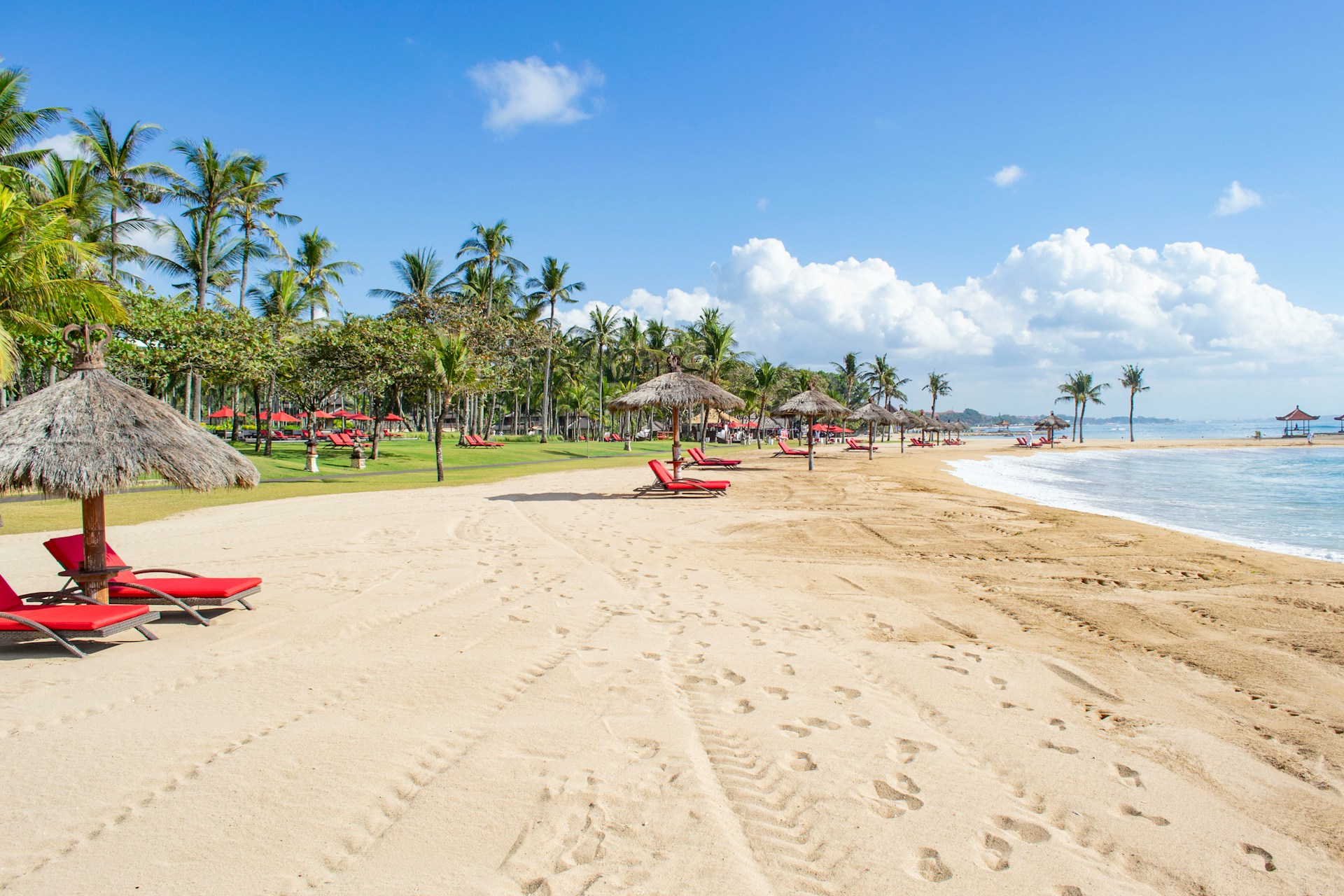
Bali’s beaches vary quite a bit depending on where you are on the island.
The south coast is the most developed, with long stretches of sand in places like Kuta, Seminyak, and Canggu. These areas are known for surf, beach clubs, and busy shorelines, especially around sunset.
Further down in Uluwatu, the coastline becomes more rugged, with cliffs, smaller hidden beaches, and deeper blue water. Access is often via steep paths, and the beaches themselves tend to feel more tucked away.
On the east coast, places like Amed have darker, volcanic sand and much calmer water, which is better suited to snorkeling and diving rather than surf.
Out on nearby islands like Nusa Penida, the beaches are more dramatic and less developed, with steep cliffs and bright turquoise water shaping the landscape.
Tanah Lot Temple

Tanah Lot is one of Bali’s most recognizable temples, set on a rock formation just off the coast.
At high tide, it’s completely surrounded by water, while at low tide you can walk across to the base of the rock. The setting is what stands out – waves crashing around it, with the temple sitting slightly apart from the mainland.
It’s an important part of Bali’s spiritual landscape, forming part of a chain of sea temples built along the coastline. The structure itself isn’t open to visitors, but the surrounding area is.
It’s especially known for sunset, when the light hits the water and the temple silhouette stands out against the sky.
Uluwatu Temple

Perched on a high limestone cliff, Uluwatu Temple overlooks the Indian Ocean from Bali’s southern edge.
It’s one of the island’s key sea temples, believed to play a role in protecting Bali from negative spirits. The setting is a big part of its identity, with steep drops and wide ocean views stretching along the coastline.
Paths run along the cliffside, connecting different parts of the temple complex and offering viewpoints out over the water. Monkeys are often seen around the area, moving between the trees and temple structures.
Toward sunset, the site becomes a focal point for Kecak dance performances, held in an open-air amphitheater facing the ocean.
Ubud Monkey Forest

Right in the center of Ubud, the Monkey Forest is a dense, shaded area filled with temples and long-tailed macaques.
The forest itself is part of a protected sanctuary, with walking paths that wind through thick greenery, stone statues, and old temple structures covered in moss. It feels more like a jungle than a typical attraction.
Hundreds of monkeys live here, moving freely through the trees and along the pathways. They’re used to people, but still unpredictable, so there’s a bit of awareness needed while walking through.
Beyond the monkeys, the site also has spiritual significance, with several temples inside the forest that are still used for ceremonies.
Mount Batur
Rising above the surrounding landscape, Mount Batur is one of Bali’s most active volcanoes.
It sits within a large caldera, with Lake Batur stretching out below and Mount Agung visible in the distance on clear days. The terrain is shaped by past eruptions, with dark lava fields and rugged paths leading up toward the summit.
The volcano is best known for its early morning hikes, where people set off before sunrise to reach the top in time for first light. From the summit, the views open up across the island, especially as the sky starts to change color.
It’s one of the more accessible volcanoes to climb in Indonesia, which is part of what makes it so popular.
Bali Safari and Marine Park
Located on the southeast side of the island, Bali Safari and Marine Park is a large wildlife park featuring animals from Indonesia and beyond.
The layout is designed to mimic natural habitats, with open enclosures where animals roam in larger spaces rather than traditional cages. A safari-style bus takes visitors through different zones, offering a closer look at species like elephants, zebras, and lions.
In addition to the safari area, the park includes shows, exhibits, and a marine section with aquatic life. There are also opportunities to learn about conservation efforts and the animals themselves.
It’s set up as a full-day attraction, combining wildlife viewing with educational and entertainment elements.
History, Culture and Other Things Bali is Known For
Hindu Culture
Deeply woven into daily life, Hindu culture shapes much of what you see and experience in Bali.
The version practiced here is distinct from that in India, blending elements of Hinduism with Buddhism, animism, and ancestral traditions. This mix gives Balinese culture its own identity, with rituals and beliefs that are closely tied to the natural world.
Temples are everywhere across the island, and offerings are placed daily outside homes, shops, and shrines. These small, flower-filled baskets are part of routine life, not just something reserved for special occasions.
Ceremonies, festivals, and processions happen regularly, often without much notice, and are treated as a normal part of the day rather than a spectacle.
Festivals

Throughout the year, Bali’s calendar is shaped by a steady cycle of religious festivals and ceremonies.
Many of these are based on the Balinese calendar, so dates don’t always line up with the standard one. Events like Galungan mark the victory of good over evil, while Nyepi, the Day of Silence, brings the entire island to a complete standstill for 24 hours.
Ceremonies often involve temple gatherings, processions, offerings, and traditional dress, with entire communities taking part. Some are large and widely recognized, while others are smaller and tied to specific villages or temples.
Rather than being occasional events, these festivals are an ongoing part of life on the island, reflecting the strong connection between religion, community, and daily routine.
Temples

Scattered across the island, temples are a constant presence in Bali.
Known locally as pura, they range from small neighborhood shrines to large, multi-level complexes set against mountains, lakes, or the coastline. Their design is distinctive, with split gates, tiered roofs, and detailed stone carvings that reflect both religious meaning and local craftsmanship.
One of the most significant is Besakih Temple, often referred to as Bali’s “Mother Temple.” It sits on the slopes of Mount Agung and is made up of multiple temple structures spread across a large hillside complex.
Each temple serves a specific purpose, whether it’s tied to a village, a family, or part of a wider network across the island. Some are more accessible to visitors, while others remain primarily for worship.
Volcanoes

Shaping much of Bali’s landscape, volcanoes play a central role in how the island looks and feels.
The two main ones are Mount Agung, the highest and most sacred peak, and Mount Batur, which sits inside a large caldera with a lake at its base. Both are still active and have influenced the surrounding terrain over time.
The land around them is marked by lava fields, fertile soil, and wide, open views that contrast with the more built-up coastal areas. In many parts of the island, the volcanoes are visible in the distance and are closely tied to local beliefs and traditions.
Green Rice Fields

Layered across hillsides and valleys, rice terraces are one of Bali’s most recognizable landscapes.
These stepped fields are shaped using a traditional irrigation system known as subak, which has been used for generations to manage water flow between farms. The result is a series of neatly arranged paddies that follow the natural contours of the land.
The scenery shifts throughout the year, from bright green when the rice is growing to softer golden tones closer to harvest. Areas like Tegalalang and Jatiluwih are especially well known for these views.
Canang Sari

Seen on sidewalks, doorsteps, and in front of shrines, canang sari are a daily part of life in Bali.
These small offerings are made from woven palm leaves and filled with flowers, incense, and other symbolic items. Each element has meaning, often representing gratitude, balance, and respect for the spiritual world.
They’re placed throughout the day outside homes, businesses, and temples, usually accompanied by a lit incense stick. It’s a quiet, routine practice that happens across the island, often without drawing much attention.
Beach Clubs

Along Bali’s southwest coast, beach clubs have become a defining part of the social scene.
These spaces are typically set right by the ocean, combining restaurants, bars, pools, and lounge areas in one place. The focus is on long afternoons that turn into evenings, with music, food, and views of the sunset all built into the experience.
Many are designed with a more polished feel, with daybeds, cocktails, and open-air layouts facing the water. Some host DJs and events, while others keep things more low-key during the day.
Trendy beach clubs in Seminyak like Potato Head and KU DE TA wow you with awesome views, yummy eats, and fun-filled events.
Swings

Set high above jungles, rivers, and rice fields, swings have become a well-known attraction across Bali.
They’re usually built on the edge of valleys or hillsides, sending you out over open space with wide views below. Many are found in scenic areas around Ubud and other inland parts of the island.
Riders are secured with a harness and pushed outward, creating a sweeping motion over the landscape. The emphasis is on the setting, with greenery, cliffs, and river valleys forming the backdrop.
They’ve become especially popular for photos, with different setups designed to frame the surrounding scenery.
Co-Working Spaces and Digital Nomads
In recent years, Bali has become closely associated with remote work and long-term stays.
Areas like Canggu and Ubud are filled with co-working spaces, offering desks, reliable Wi-Fi, and shared environments for freelancers and remote workers. Many of these spaces are designed to be open and social, with cafes, meeting areas, and events built into the setup.
This has led to a growing digital nomad community, with people basing themselves on the island for weeks or months at a time. The combination of warm weather, relatively low living costs, and established infrastructure has played a big role in that shift.
Yoga and Wellness

Bali is widely known for its focus on yoga and wellness, with the town of Ubud often seen as the center of it. The area is filled with yoga studios, retreat spaces, and wellness centers offering everything from daily classes to multi-day programs.
Visitors come for a mix of activities, including yoga, meditation, and spa treatments, often set in open-air spaces surrounded by rice fields or jungle. Many retreats also include things like sound healing, breathwork, and traditional Balinese therapies.
The overall pace is slower than in the coastal resort areas, which makes it a popular place to focus on relaxation and stepping away from a more fast-paced routine.
Surfing

With consistent swells and warm water year-round, Bali has built a reputation as one of the top surfing destinations in the world.
The coastline offers a range of breaks, from beginner-friendly waves in places like Kuta to more advanced spots around Uluwatu and Padang Padang. Conditions vary depending on the season, with different coasts working better at different times of year.
Surf culture is a visible part of daily life in many areas, especially along the southwest coast, where boards, surf schools, and beachside rentals are everywhere.
It’s an activity that draws both first-timers and experienced surfers, with a wide mix of conditions across the island.
Balinese Dances

Balinese dance plays an important role in the island’s religion and storytelling traditions.
Performances often take place in temples or during ceremonies, with movements, costumes, and music all carrying symbolic meaning. Many dances are based on Hindu epics, with characters and scenes brought to life through detailed gestures and expressions.
The Kecak dance is one of the most well-known, featuring a group chant and a dramatic retelling of a story, often performed at sunset. Other styles, like Legong and Barong, focus on different themes, including mythology and the balance between good and evil.
FAQs About What Bali is Known For
Bali is best known for its mix of beaches, temples, rice terraces, and a strong cultural identity. It’s one of the few places where you’ll find surf spots, jungle landscapes, and traditional ceremonies all within the same island.
It’s a mix of both. Coastal areas like Seminyak, Canggu, and Uluwatu are known for beaches and surf, while places like Ubud are more associated with temples, rice fields, and traditional arts.
A big part of Bali’s appeal is how varied it is. You’ve got beach towns, quieter inland areas, smaller islands like Nusa Penida, and a wide range of experiences without having to travel far.
Balinese and Indonesian dishes like Babi Guling, Nasi Campur, Satay Lilit, and Mie Goreng are some of the most well-known. The food scene also includes a mix of local warungs and more modern cafes and restaurants.
Yes, but mainly in certain areas. Seminyak and Canggu are known for beach clubs, bars, and late-night spots, while other parts of the island are much quieter.
Bali is known for its rice terraces, volcanic landscapes, waterfalls, and coastline. Places like Ubud, Mount Batur, and Nusa Penida highlight different sides of the island’s scenery.
Thinking about taking a trip to Bali but undecided? In this article I discuss whether Bali is worth visiting. Also check out my Ultimate Bali Travel Guide and this list of the best souvenirs to bring home from Bali.
