

I spent a few days in Marrakech and quickly realized how much there is to buy in Morocco.
The souks are packed with everything from leather bags and ceramics to spices, oils and textiles, and it doesn’t take long before you start spotting the same things over and over again. Prices are rarely fixed, so it’s worth brushing up on your haggling skills before you start shopping.
If you’re wondering what to buy in Morocco, here are some of the best souvenirs to look out for.
Best Morocco Souvenirs
Leather Bags and Belts
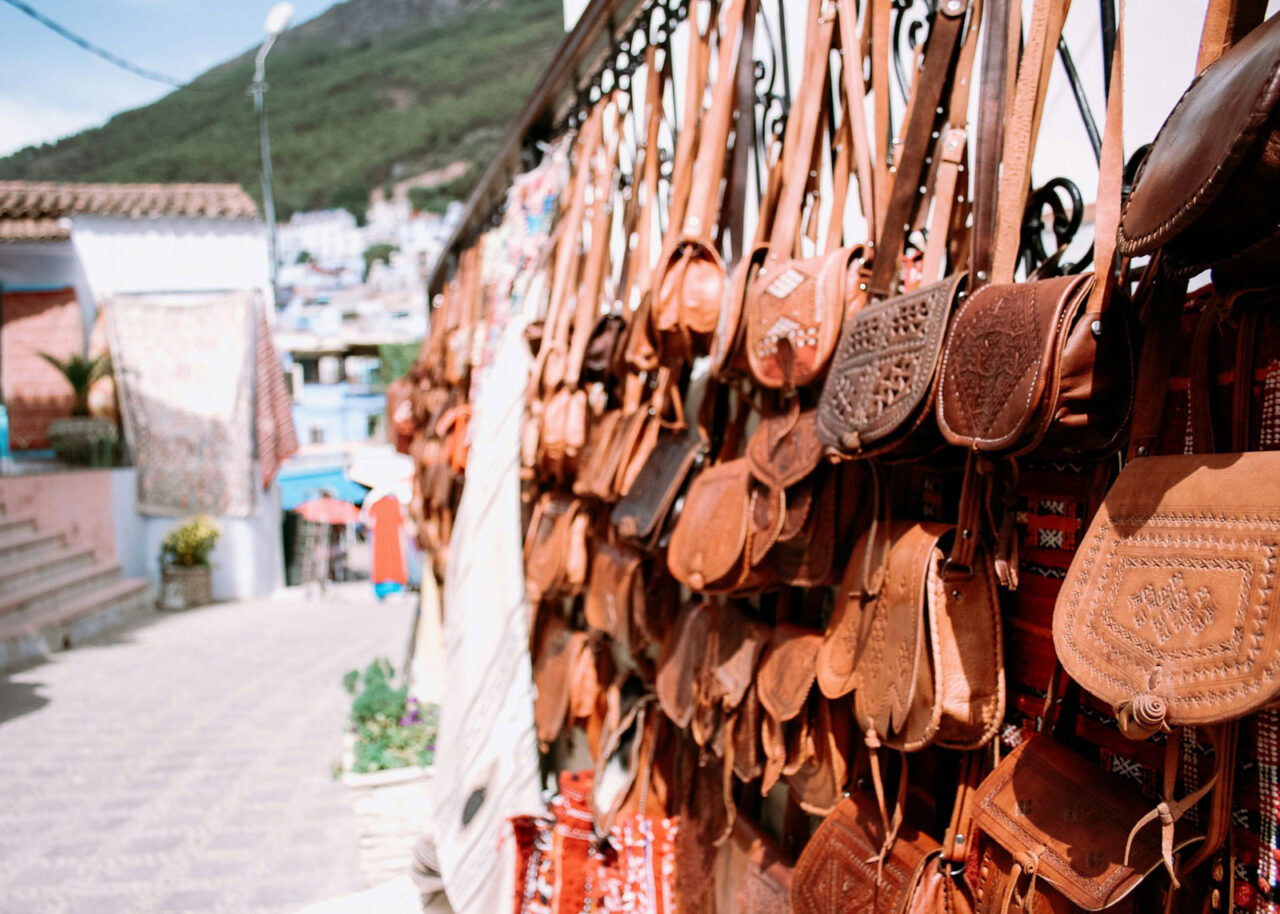
Leather goods are one of the first things you’ll notice in the souks.
Marrakech is especially known for its leather, and you’ll see everything from bags and belts to jackets and slippers. A lot of it is made locally, often using traditional tanning methods, which is why you’ll sometimes catch that strong smell near the tanneries.
Quality can vary, so it’s worth taking your time and having a proper look before buying. If you find something you like, this is also where your haggling skills come in.
Floor Cushions and Poufs
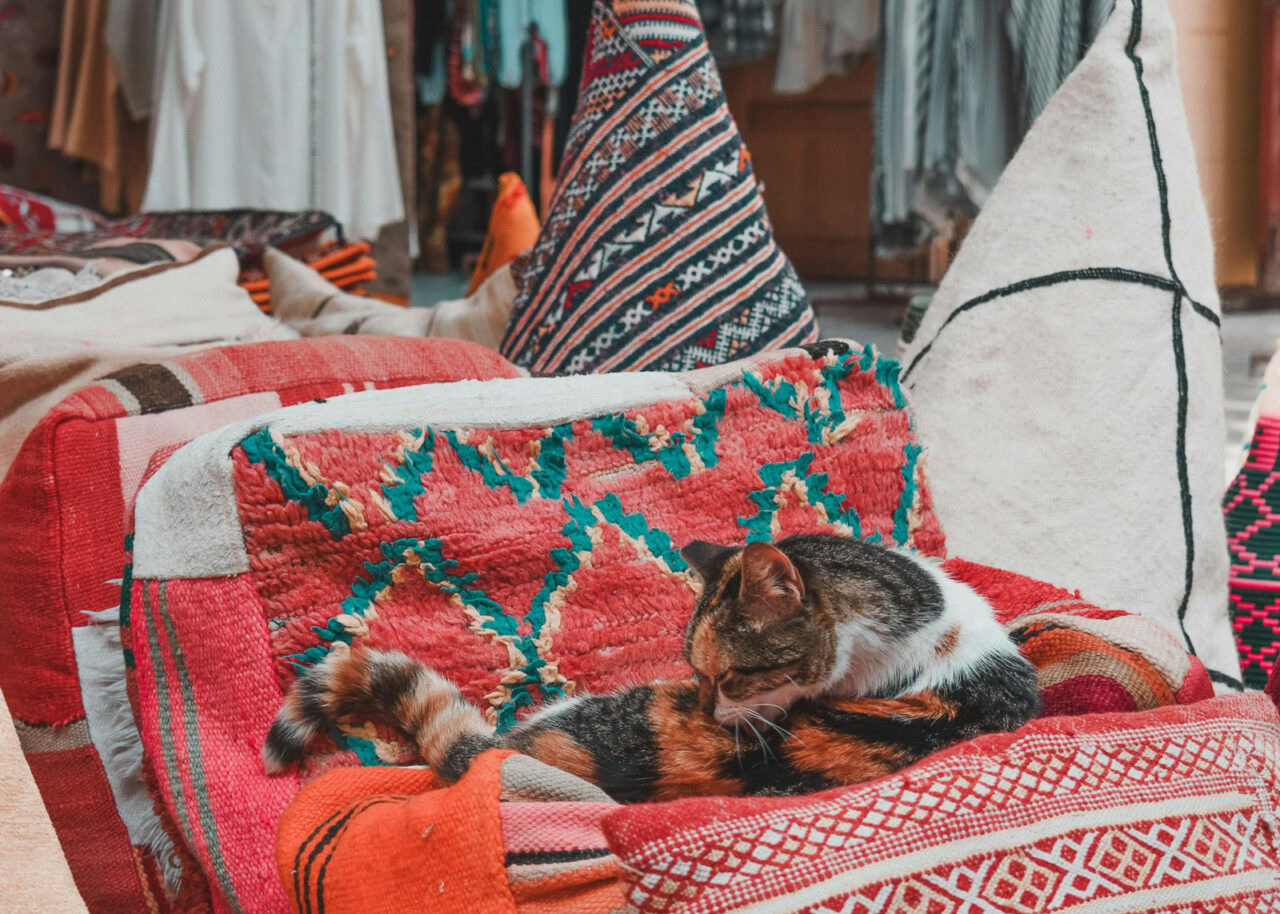
As you walk through the markets, you’ll probably see stacks of floor cushions and leather poufs in different colors and designs.
They’re usually hand-stitched and filled after you buy them, which makes them easier to pack. Some are more decorative, while others are actually comfortable enough to use as extra seating.
They’re one of those things that instantly make a space feel a bit more “Moroccan,” without being too over the top.
Mint Tea

Mint tea is one of those Moroccan drinks that you’ll be offered everywhere in Morocco, whether you’re in a riad, a café, or someone’s home.
It’s made with green tea, fresh mint, and a lot of sugar, and it’s usually poured from a height into small glasses. The whole process is part of the experience, not just the drink itself.
You’ll see tea sets everywhere, so if you enjoy it while you’re there – it’s an easy one to recreate at home.
Argan Oil and Olive Oil
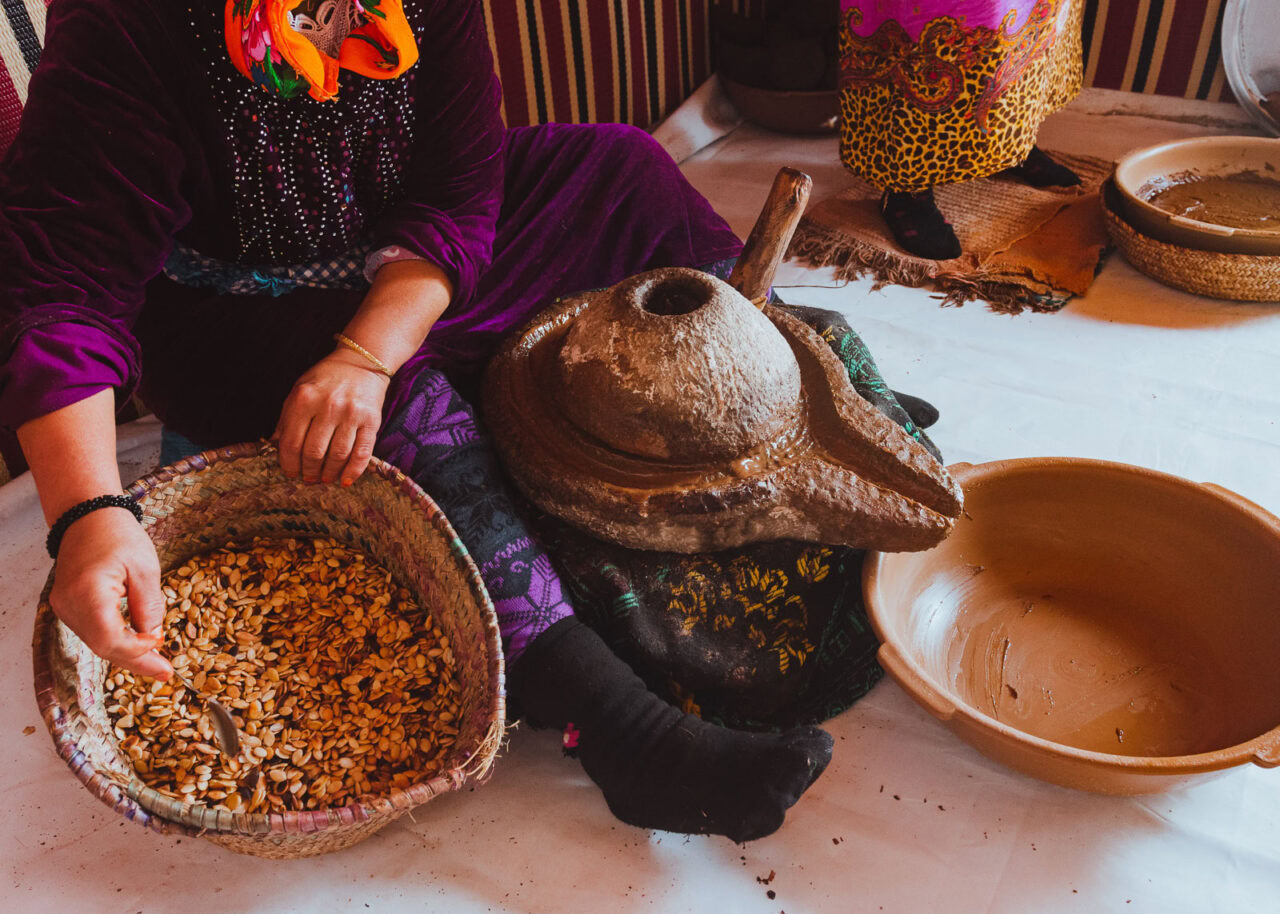
Argan oil is one of the most well-known products to come out of Morocco.
It’s used for both cooking and beauty, depending on the type you buy, and is made from the nuts of the argan tree, which grows mainly in this part of the world. You’ll see it sold in markets, shops, and even at roadside stops.
Olive oil is another staple, often locally produced and used in everyday cooking. Both are easy to bring home, just make sure they’re sealed properly.
Berber Rugs
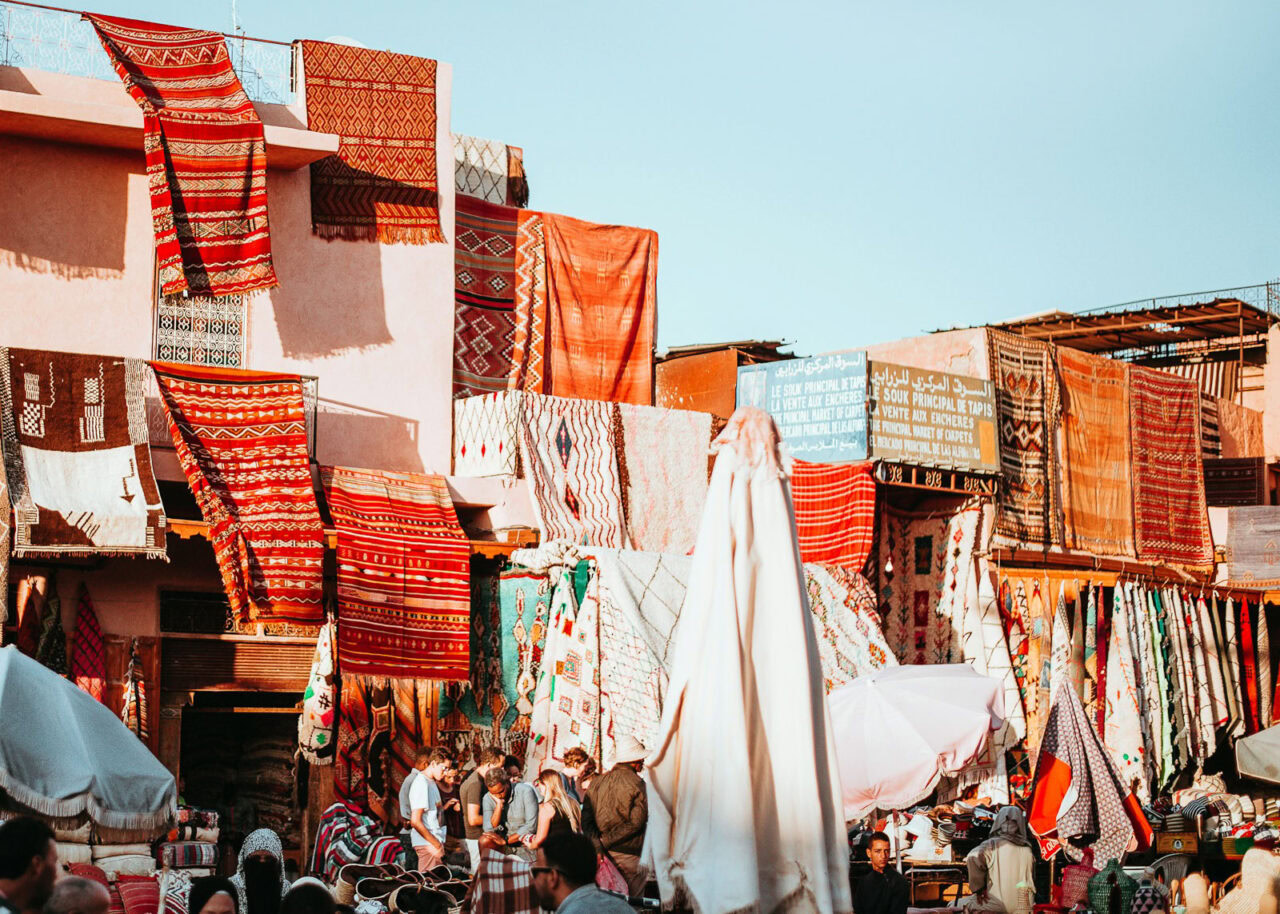
Berber rugs are one of the more traditional items you’ll come across in Morocco.
They’re handwoven using wool and often feature simple geometric patterns. Each one is slightly different, which is part of the appeal, but also means prices can vary quite a bit.
They can be bulky to travel with, but many sellers will arrange shipping if you don’t want to carry it yourself.
Thuya Wood Boxes

In places like Essaouira, you’ll come across shops selling thuya wood items.
The wood has a very distinctive grain and a slightly sweet smell, and it’s often used to make small boxes, trays, and decorative pieces. Most of them are handmade and polished by local artisans.
They’re compact, so they’re one of the easier things to pack without worrying about space.
Rose Water
Rose water is another product you’ll see quite often, especially in beauty shops.
It’s made from Damask roses and is commonly used as a toner or facial mist. The scent is fairly light, so it doesn’t feel overpowering.
Bottles are usually small, which makes them easy to bring back.
Zaatar, Herbs and Spices
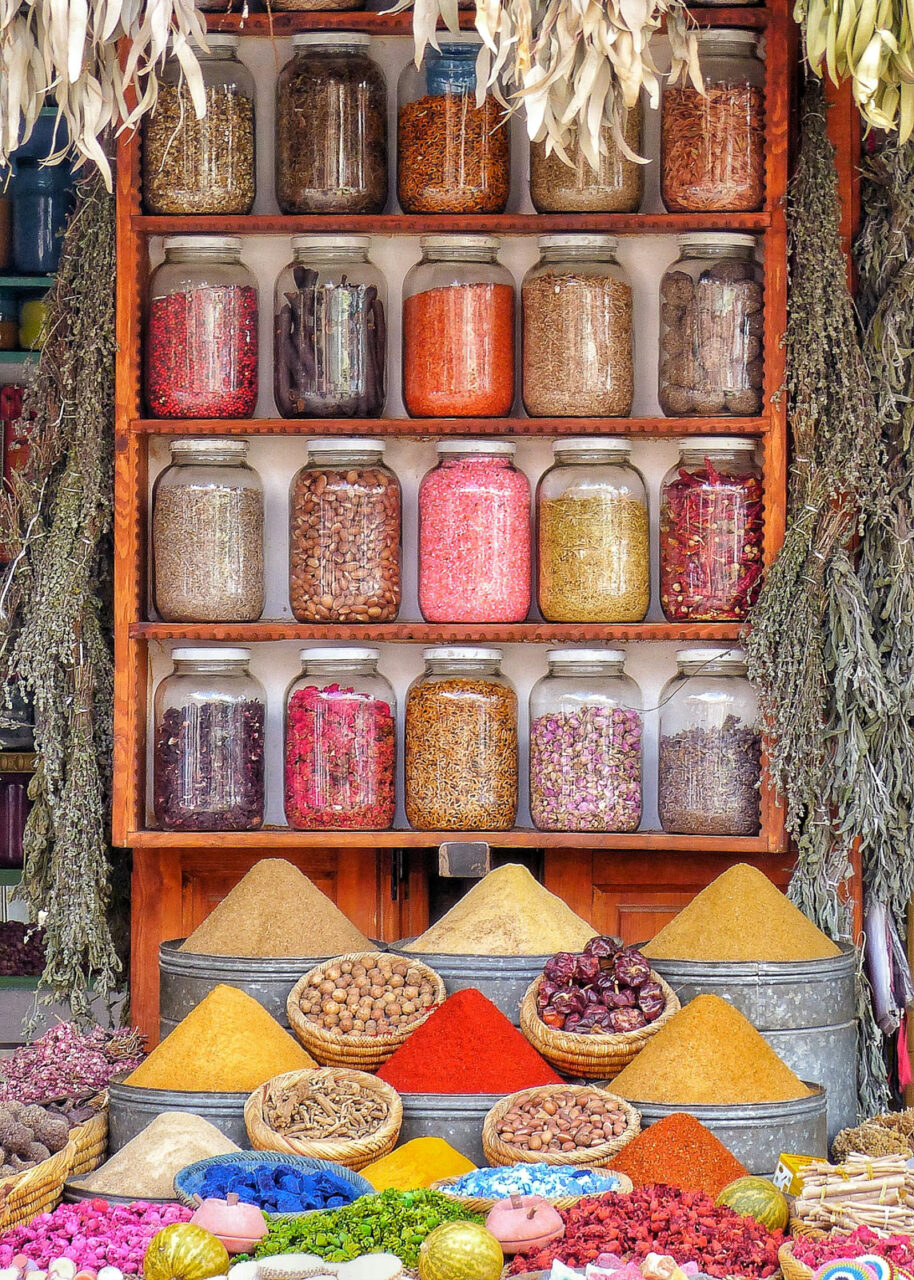
Spices are everywhere in Morocco, and walking through the souks you’ll see them piled high in every color.
You’ll come across staples like cumin, paprika, turmeric, and saffron, but one of the most well-known blends is ras el hanout. It’s a mix of spices that can include things like cinnamon, cumin, coriander, ginger, and sometimes even dried flowers, depending on who makes it.
Every vendor has their own version, so the flavor can vary quite a bit. If you’re cooking Moroccan food at home, this is one of the easiest ways to recreate those flavors.
Tagines

Tagines show up in both restaurants and shops.
They’re the traditional cooking pots used for slow-cooked dishes, with that distinctive cone-shaped lid. You can buy them in all sizes, from small decorative ones to full cooking versions.
If you plan on using it, it’s worth checking that it’s suitable for cooking rather than just display.
Amlou
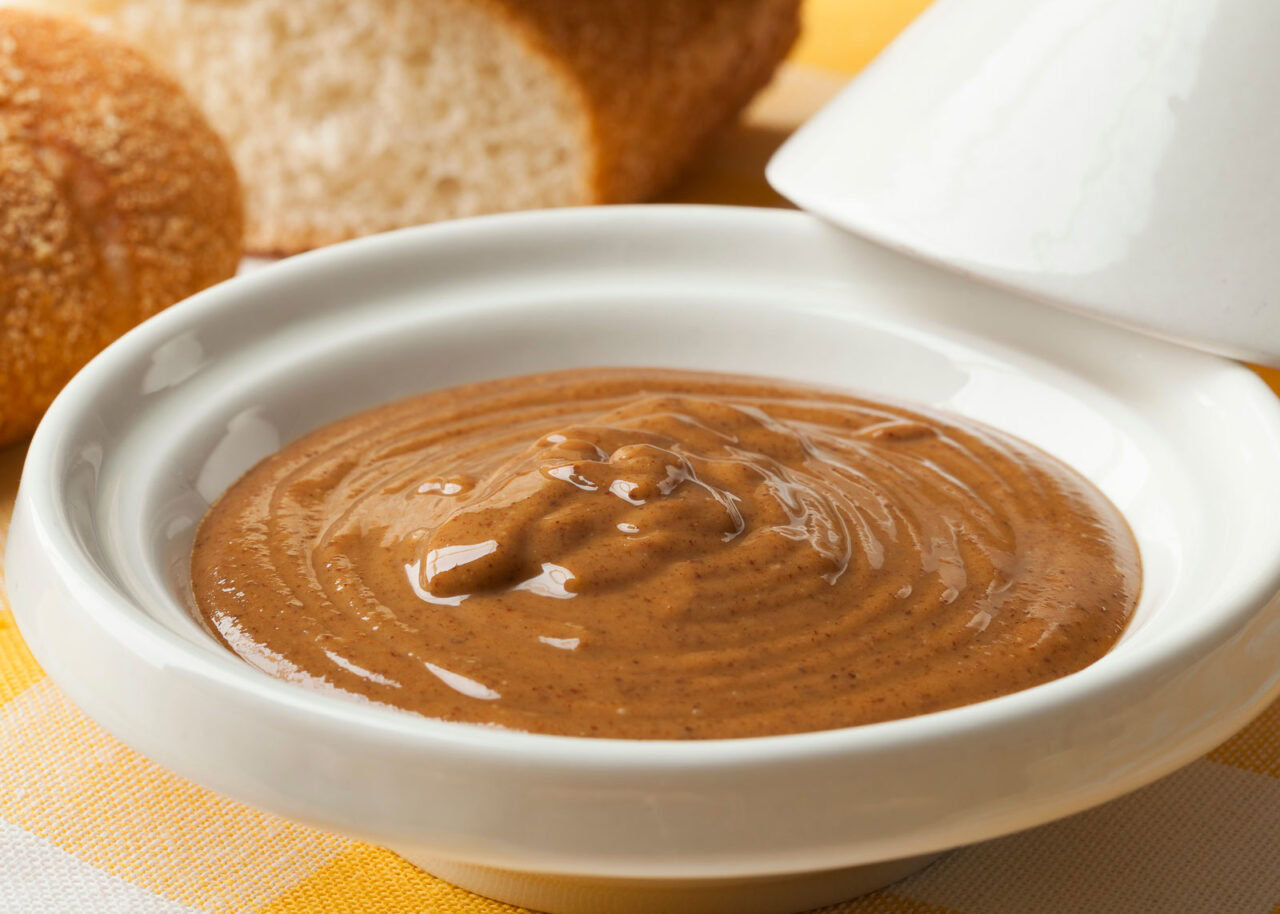
You’ll usually come across amlou at breakfast or alongside bread and tea.
Known as “Moroccan Nutella” – it’s a spread made from ground almonds, argan oil, and honey, with a slightly nutty, sweet flavour. The texture is a bit thicker than something like peanut butter, but just as easy to eat.
It’s not as widely known outside Morocco, which makes it a good one to try while you’re there, and easy enough to bring back in a jar if you find one you like.
Kaftan
Kaftans are one of the more traditional clothing items you’ll come across in Morocco.
They’re long, loose-fitting garments, often made from lightweight fabrics like cotton or more elaborate materials like silk or velvet for special occasions. You’ll see them worn at weddings and celebrations, but also in simpler styles for everyday wear.
Some are heavily embroidered, while others are more understated, so there’s quite a bit of variety depending on what you’re looking for.
Djellaba

Walking around Marrakech, you’ll probably notice djellabas pretty quickly.
They’re the long robes with a pointed hood, worn by both men and women, and you’ll see them everywhere from the medina to more residential areas. Materials vary depending on the season, lighter fabrics for summer and thicker wool for cooler months.
They’re comfortable and practical, but also very tied to everyday life in Morocco.
Dates

Dates are a staple in Morocco and something you’ll come across constantly.
Varieties like Medjool are especially popular, known for their soft texture and rich sweetness. They’re often served with tea or offered to guests, which is part of the hospitality culture.
You’ll find them in markets in large quantities, usually much fresher and better quality than what you might be used to at home.
Babouches

Babouches are the traditional Moroccan slippers you’ll see in pretty much every market.
Made from leather, they usually have a soft sole and come in a wide range of colors and designs, from very simple to more decorative styles. Some are better suited for indoor wear, while others are sturdier.
Tea Sets
In many shops, you’ll see Moroccan tea sets displayed front and center.
They usually include a teapot, small glasses, and a tray, often made from metal with detailed engravings. The designs can be quite intricate, which is part of what makes them stand out.
Even if you don’t end up buying a full set, they give you a good sense of how important tea is in Moroccan culture.
Wicker Bags

Wicker bags from Morocco are easy to spot, especially in markets and smaller shops.
They’re made from natural materials like palm leaves or straw and are often finished with leather handles or colorful details. Some are very simple, while others are more decorative.
They’re lightweight and practical, especially if you’re heading somewhere warm after your trip.
Colorful Art From Chefchaouen

Even if you don’t make it to Chefchaouen, you’ll still see artwork inspired by it in different parts of Morocco.
The city is known for its blue-painted streets, and that color shows up in a lot of paintings, prints, and decorative items. Some pieces are quite simple, while others are more detailed.
It’s one of those souvenirs that’s tied to a very specific place, even if you didn’t visit it yourself.
A Final Word…
Morocco was one of those places where the shopping ended up being part of the experience, not something I planned in advance.
After a few days in Marrakech, it became pretty obvious what people tend to buy, and a lot of it comes back to the same things, leather goods, spices, textiles, and a few items that are very specific to the country.
The souks are a big part of it too. You’ll need to get used to negotiating, but that’s part of how it all works, and once you get into it, it’s actually quite fun. If you’re planning a trip to Marrakech, then the best place to find all your souvenirs is definitely Souk Semmarine, the main artery of the medina. Check out my 2-day Marrakech itinerary for more things to do in the city.
