

I spent a week traveling around Egypt as a solo female traveler, and one thing I noticed pretty quickly is that you can find souvenirs everywhere.
From the pyramids in Giza to temples in Luxor and markets in Cairo, there’s always someone selling something. In some of the most touristy places, vendors will come up to you directly, so it can feel a bit full on at times. You’ll definitely need to get comfortable saying no and walking away if you’re not interested, and be prepared to haggle a little if you do want to buy something.
Egypt has such a long and fascinating history, and a lot of what you’ll see for sale is inspired by that. The country is famous for things like mummies, papyrus, hieroglyphs, and pharaohs, so it makes sense that many of the souvenirs reflect that ancient past. If you’re still planning your trip, it’s worth checking out what Egypt is known for so you have a better idea of the culture and history before you go.
If you’re still mapping out your route, I also have a full 7-day Egypt itinerary that covers all the main stops. For ideas on what to buy, here are some of the best souvenirs that are worth bringing home.
Souvenirs From Egypt (Quick List)
Ancient Egypt–Inspired: papyrus artwork, mummy figurines, miniature pyramids, scarab beetles, pharaoh masks, cartouche jewelry, Eye of Horus necklaces, Ankh symbols
Jewelry & Accessories: cartouche pendants, silver and gold jewelry, scarves
Home Decor & Handicrafts: alabaster vases, mother of pearl boxes, brass and copperware, rugs and carpets, cat statues, Shisha pipes
Clothing & Textiles: Egyptian cotton sheets, galabeyas, scarves
Food & Drink: spices, dried dates, baklava, knafeh
Fragrance & Wellness: perfumes, essential oils
Best Egypt Souvenirs
Papyrus
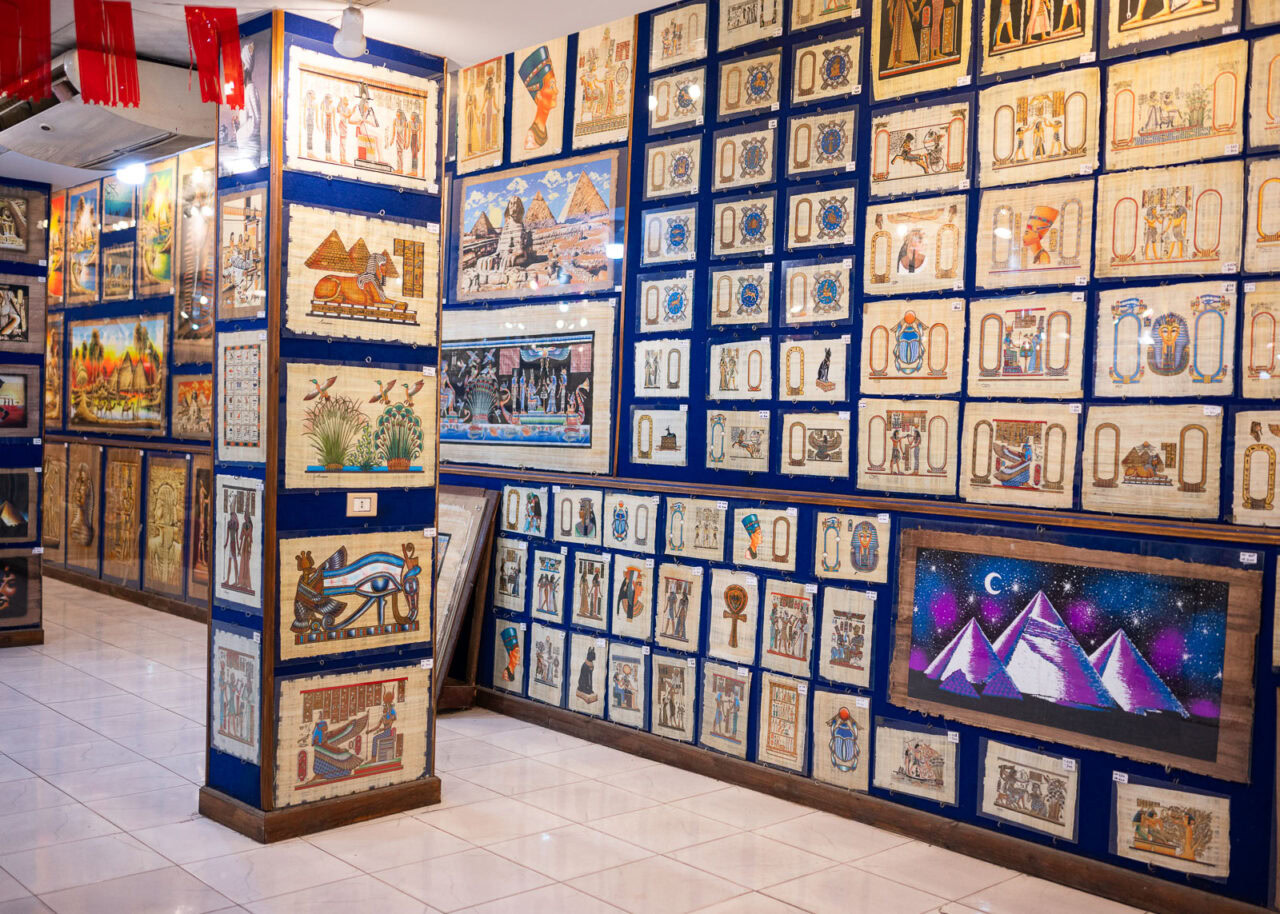
Papyrus is probably one of the most recognizable Egypt souvenirs, and it’s directly tied to the country’s history.
This was one of the earliest forms of paper, made from the papyrus plant along the Nile, and used as far back as 3000 BC. Today, you’ll find it sold as decorative artwork, usually painted with hieroglyphs, ancient scenes, or symbolic figures.
Some pieces are clearly made for tourists, but others are genuinely hand-painted and much higher quality. If you’re interested in this, it’s worth visiting a reputable papyrus workshop rather than just buying from street stalls.
Perfumes
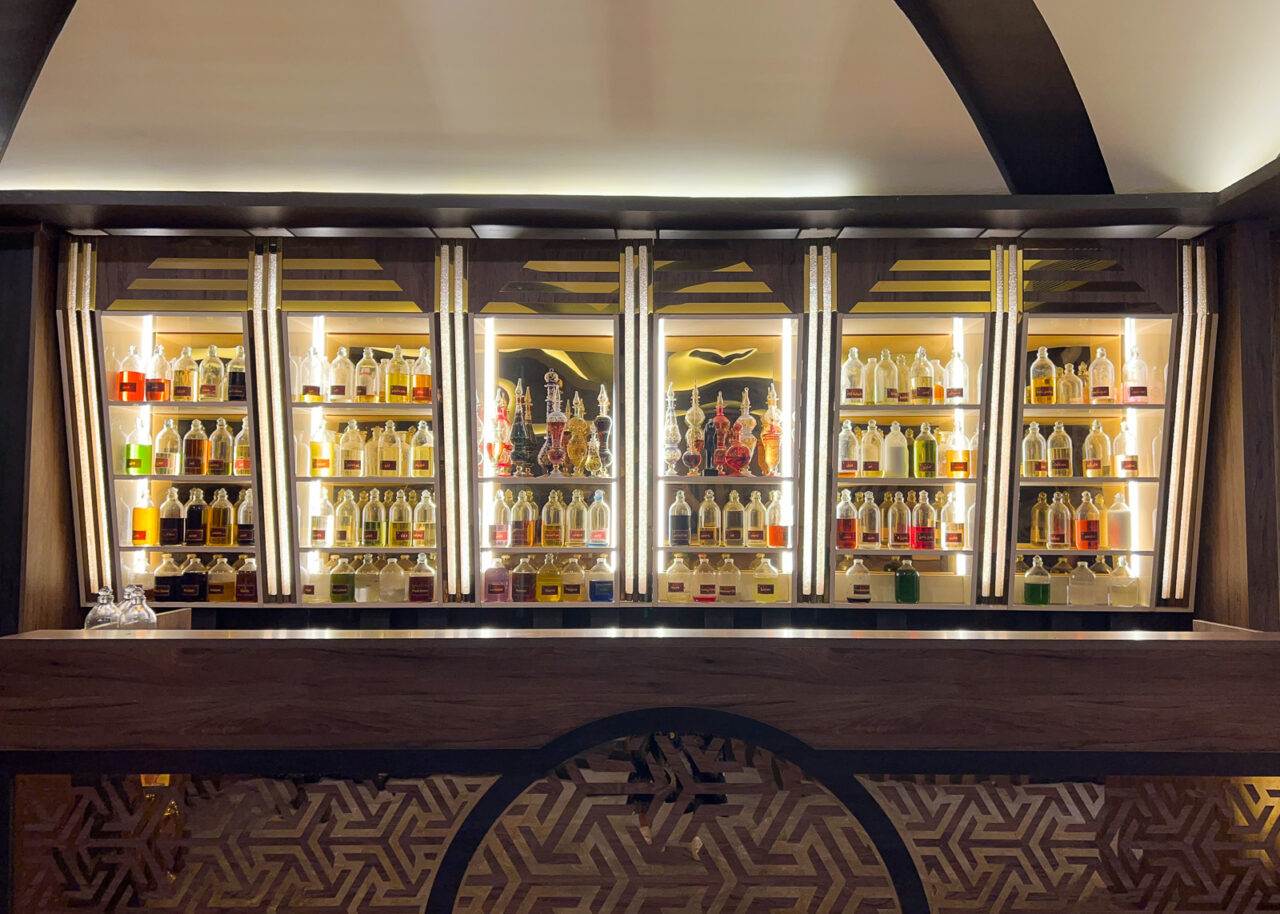
Egypt is known for its history with perfume, and you’ll notice that pretty quickly once you start walking through local markets.
Perfume shops are everywhere, especially in places like Cairo and Aswan, and many of them sell oils inspired by ancient Egyptian blends. Tours often include stops at the perfume stores, where you’ll be invited in to try different scents and purchase some to take home.
The fragrances tend to be stronger and more concentrated than what you might be used to, since many are oil-based rather than alcohol-based.
Jasmine, lotus, musk, and sandalwood are some of the most common, and you can usually buy them in small decorative glass bottles.
Essential Oils

Alongside perfumes, essential oils are another popular thing to buy in Egypt.
A lot of them are made using traditional extraction methods and locally grown plants like rose, chamomile, and eucalyptus. They’re often sold in small bottles, sometimes in the same shops as perfumes.
What makes these stand out is the strength. They tend to be quite potent, so a little goes a long way. You can use them for fragrance, skincare, or even just as a reminder of your trip.
Scarab Beetles
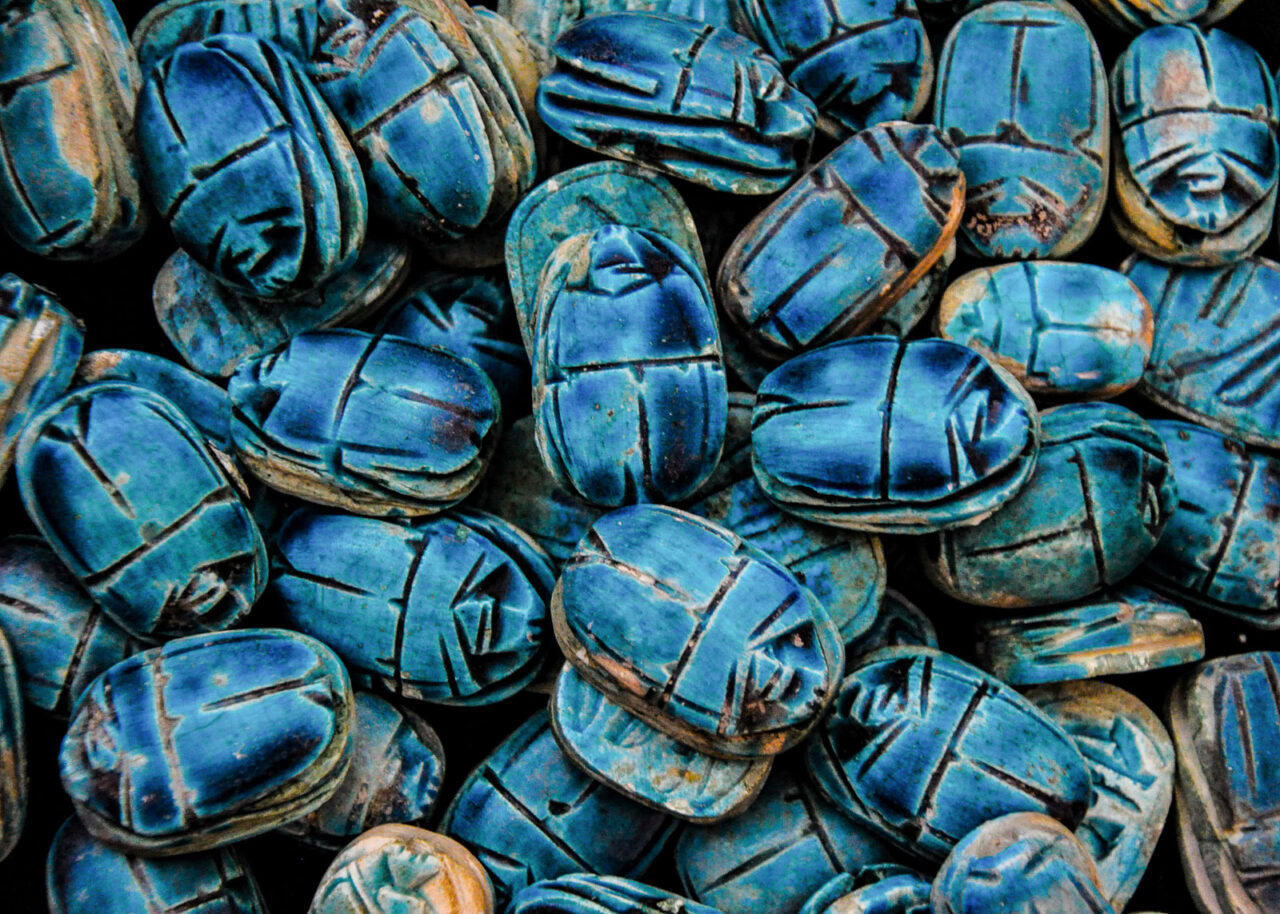
In ancient Egyptian culture, the scarab beetle symbolized rebirth and transformation, which is why it shows up so often in art and jewelry throughout Egypt.
As a souvenir, it usually comes in the form of small carvings, pendants, or decorative pieces made from stone, glass, or metal.
If you’re looking for something small but still tied to Egyptian symbolism, a Scarab beetle is a great trinket to take home.
Mummy Figurines
Mummification was an ancient Egyptian practice used to preserve the body after death, based on the belief in the afterlife. Bodies were carefully treated, wrapped in linen, and placed inside decorated coffins known as sarcophagi.
Mummies have become one of the most recognizable symbols of Egypt, and you’ll find plenty of replica mummy figurines as you travel around. They’re made from materials like wood, stone, or resin, and range from simple, more playful versions to more detailed designs that look closer to what you’d see in a museum.
They’re definitely a bit touristy, but they’re also one of the most iconic Egypt souvenirs you can bring home.
Miniature Pyramids
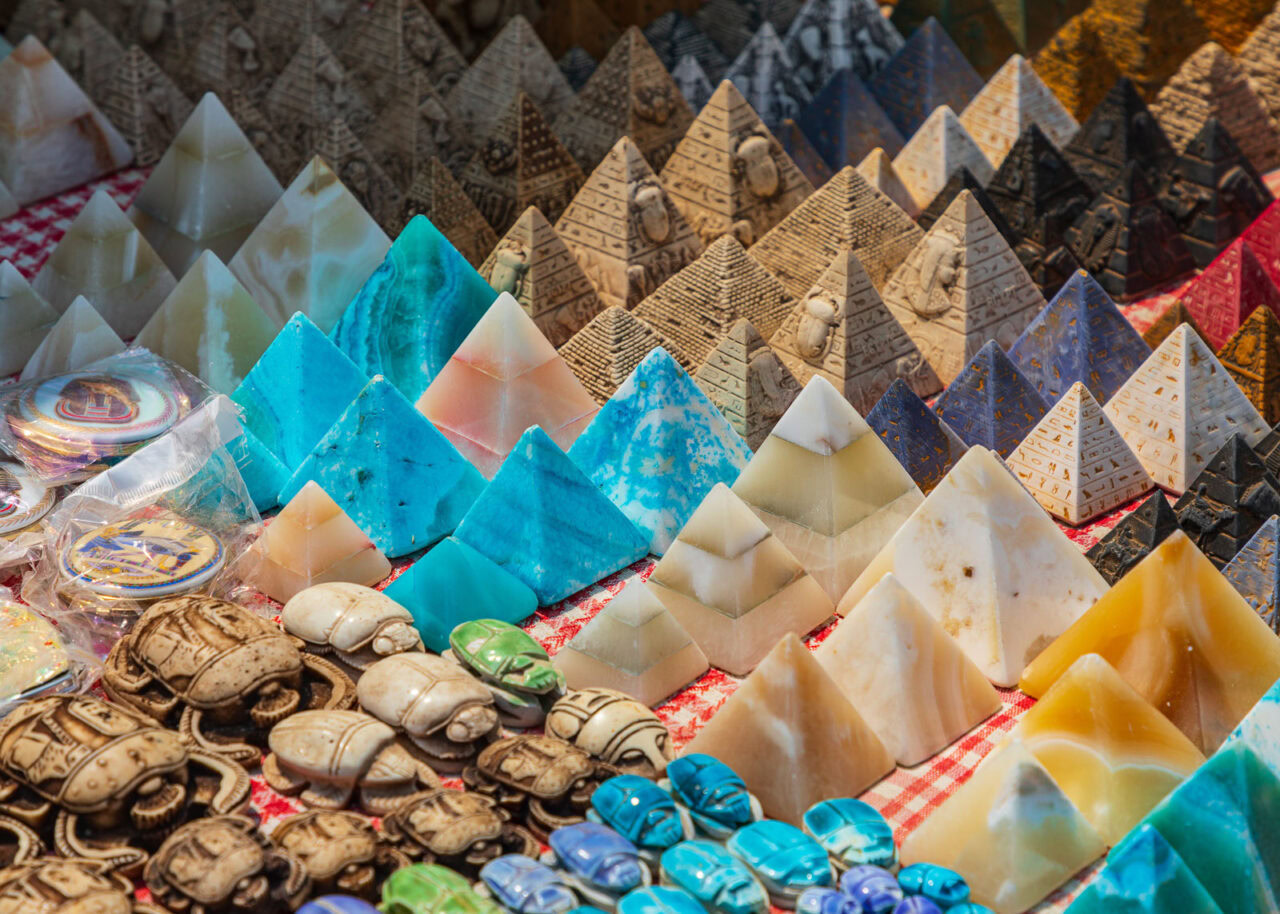
Mini pyramids are about as classic as it gets when it comes to Egypt souvenirs, and you’ll see them everywhere, especially around places like Giza and Cairo.
They’re inspired by the real pyramids, which are some of the most iconic landmarks in the world, so it makes sense they’ve become such a popular thing to bring home.
You’ll find them carved from stone, made from metal, or even glass, with some kept very simple and others featuring more detailed engravings or decorative patterns.
Cartouche
A cartouche is one of the more personal souvenirs you can buy in Egypt.
Traditionally, it was used to enclose the names of pharaohs in hieroglyphs. Today, you can get your own name translated and engraved onto a pendant, usually in gold or silver.
It’s something that feels a bit more custom compared to other souvenirs, and it ties directly back to ancient Egyptian writing and symbolism.
Eye of Horus Necklace
The Eye of Horus is one of those symbols you’ll keep seeing all over Egypt, on temple walls, in artwork, and in jewelry displays in pretty much every market.
It dates back to ancient Egyptian mythology and was believed to offer protection and ward off evil, which is why it’s still such a popular design today.
Necklaces are the most common way you’ll find it sold, usually in gold, silver, or carved stone. Some are very minimal, while others are more decorative with added details or colored inlays.
If you want a souvenir that’s instantly recognizable but still easy to incorporate into your everyday style, this is a solid option without feeling overly gimmicky.
Alabaster
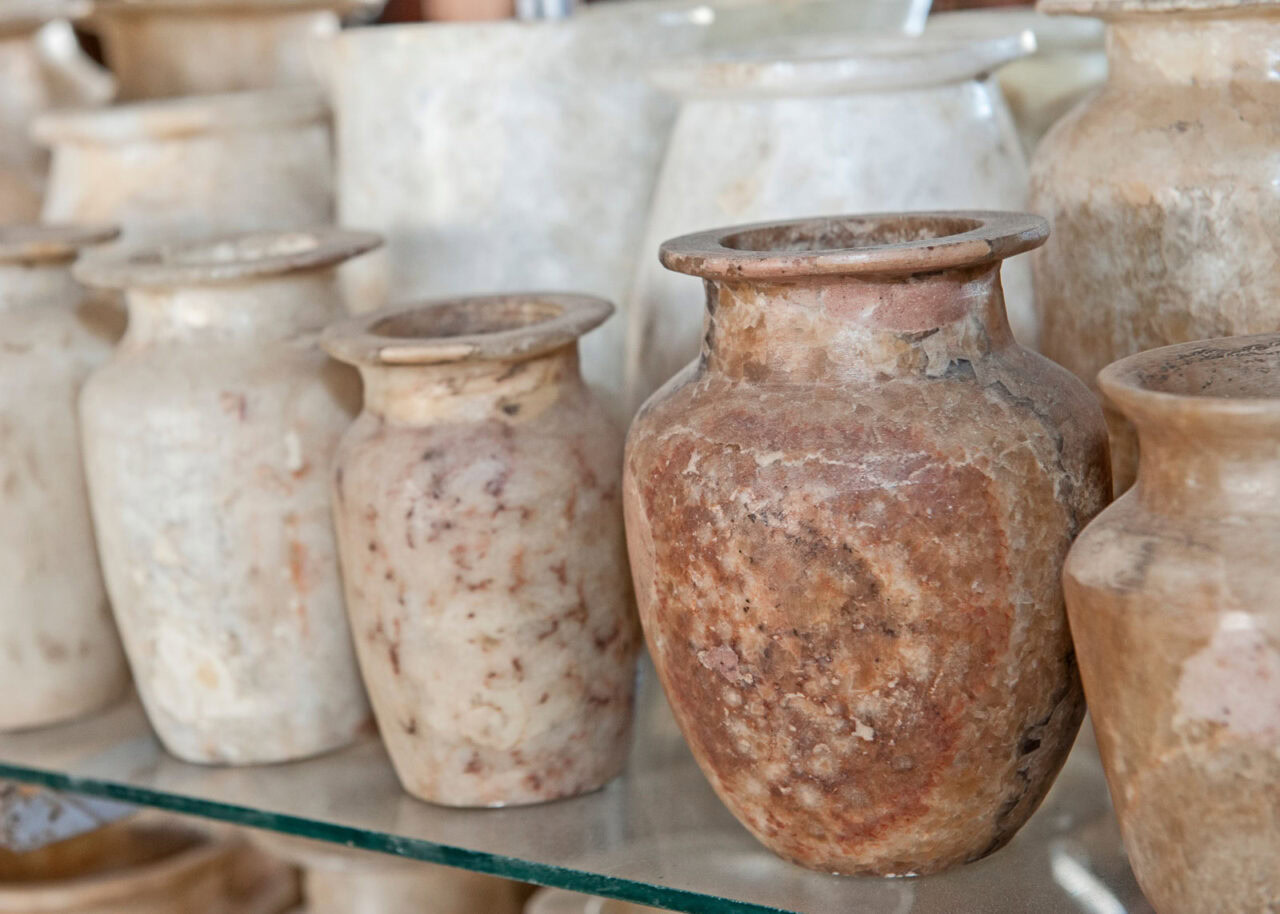
Alabaster is something you’ll come across a lot in Egypt, especially in places like Luxor.
It’s a soft stone that’s been used for centuries to create vases, statues, and decorative items. One of the interesting things about alabaster is that it can be slightly translucent, so it glows when light passes through it.
You’ll see everything from small souvenirs to larger pieces, and many are still made using traditional carving techniques.
Spices
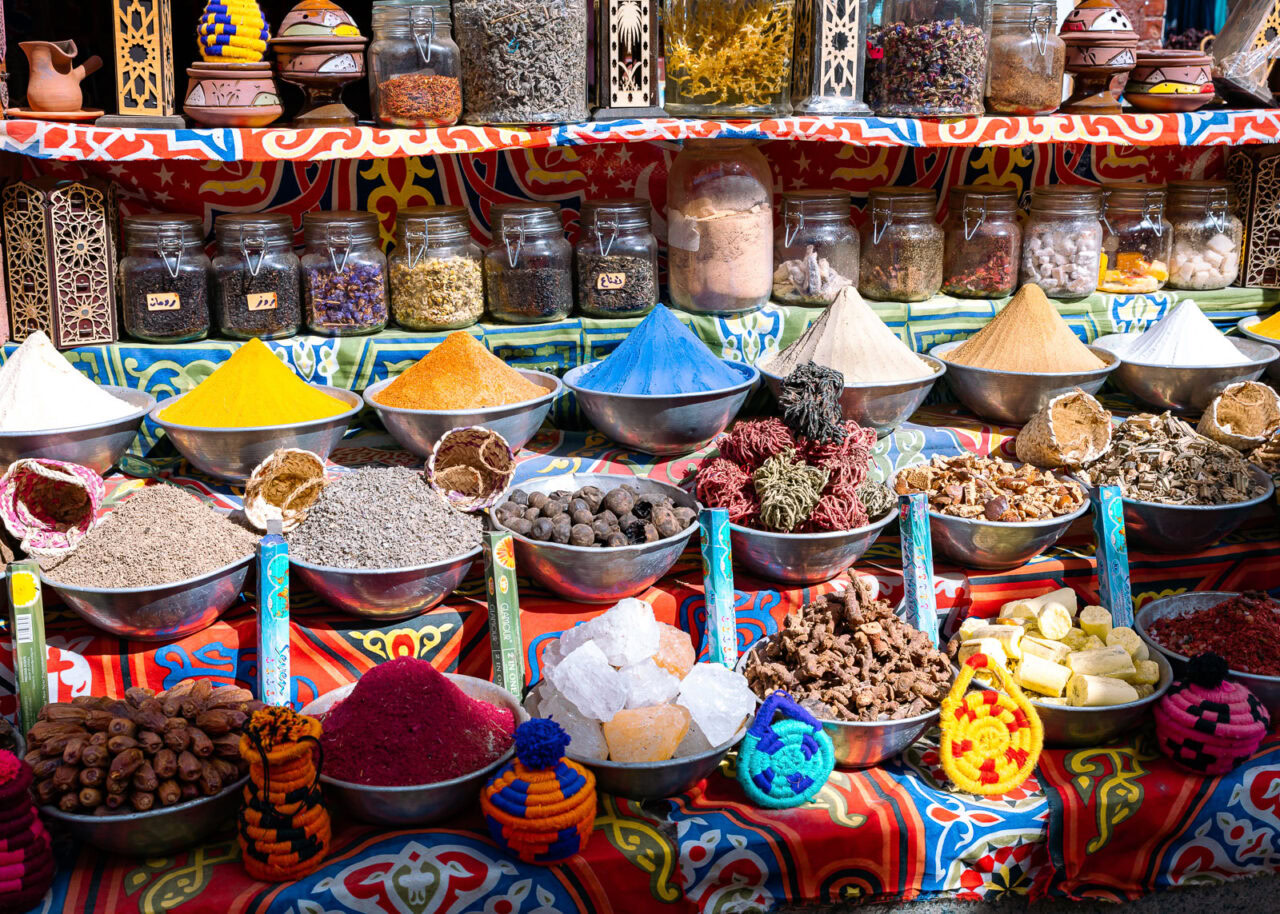
If you enjoy cooking, Egyptian spices are one of the best things to bring home.
Markets are filled with colorful displays of spices like cumin, coriander, turmeric, and chili, often sold loose or in small packages.
You’ll also come across blends like dukkah, which is a mix of nuts, seeds, and spices that’s typically eaten with bread and olive oil.
Shisha Pipes
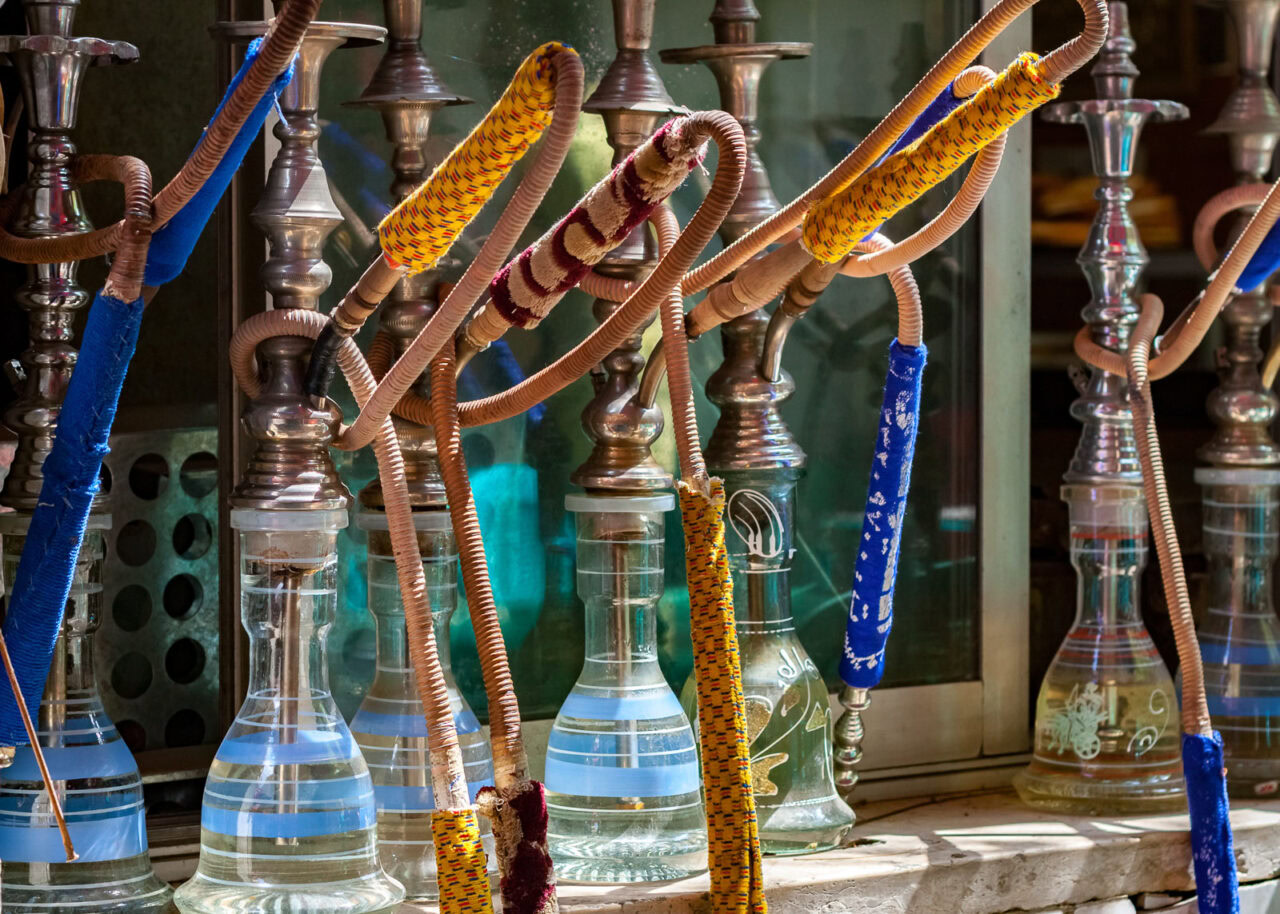
Shisha pipes are a big part of everyday life in Egypt, especially in cafés where people gather to sit, talk, and relax for hours.
If you spend any time in Cairo or along the Nile, you’ll see them everywhere. It’s as much about the social aspect as it is about the smoking itself.
As souvenirs, shisha pipes are usually quite decorative, with detailed glass bases and metalwork that make them stand out. Some are more practical and designed to be used, while others are more ornamental.
They’re not the easiest thing to travel with due to size and fragility, but if you’ve got the space, they make a pretty unique piece to bring home.
Egyptian Cotton Bed Sheets and Clothing
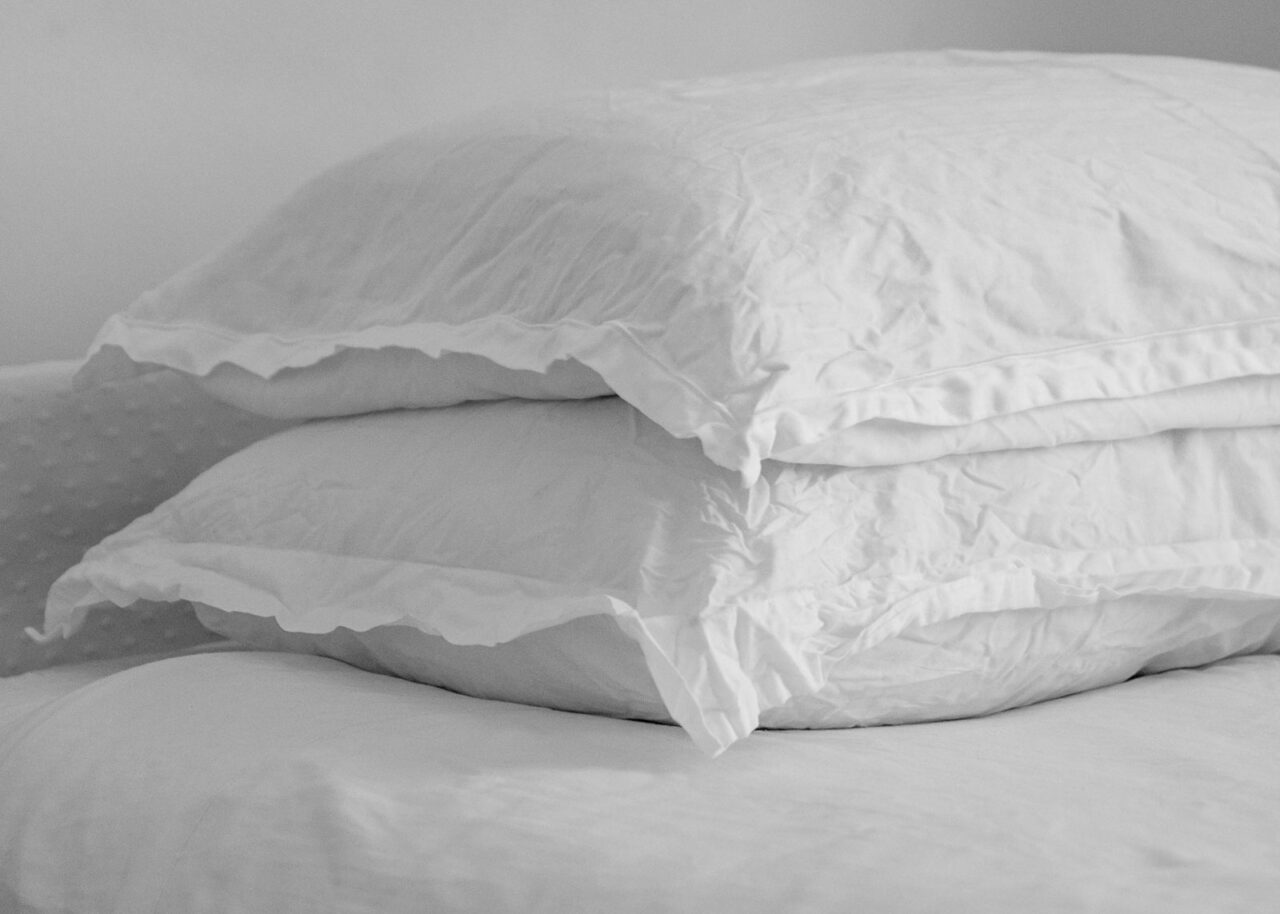
Egyptian cotton is one of the country’s most well-known exports, and it’s something you’ll see advertised everywhere.
It’s known for being soft, durable, and high quality, which is why it’s used in premium bedding and clothing. You’ll find everything from bed sheets and towels to lightweight shirts and dresses.
That said, quality can vary depending on where you buy it, so it’s worth going to a reputable shop rather than just picking something up in a market.
If you want something practical that you’ll actually use long after your trip, this is one of the better things to buy in Egypt.
Rugs and Carpets
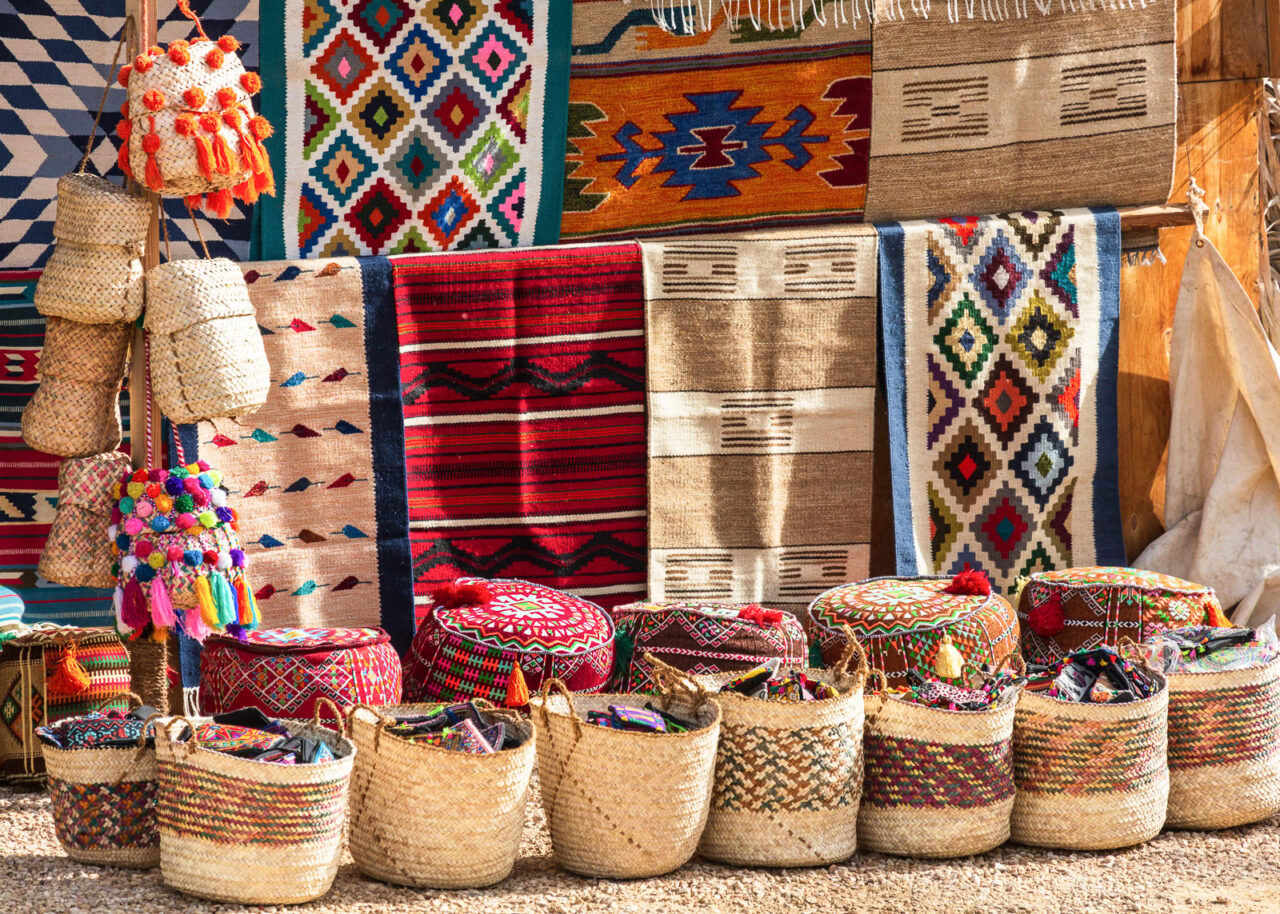
Egyptian rugs and carpets are one of those souvenirs that feel a bit more substantial.
Many are handmade using traditional weaving techniques, with patterns and colors that reflect different regions and styles. You’ll find everything from small decorative pieces to larger rugs.
They can be a bit of an investment, but they’re also something that lasts and adds character to your home.
If you’re planning to buy one, it’s worth taking your time, asking questions, and making sure you’re getting something authentic.
Galabeya
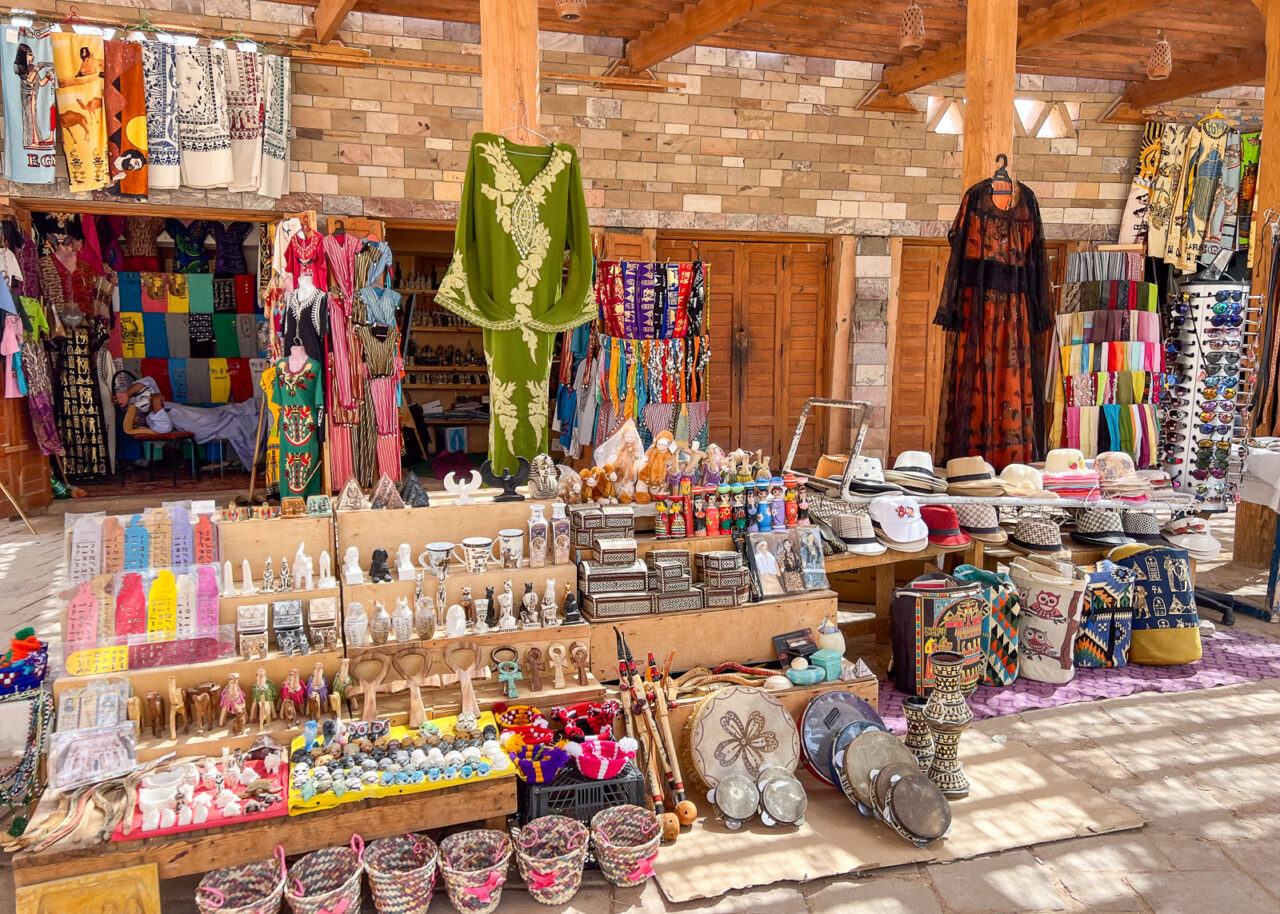
The galabeya is a traditional Egyptian garment that you’ll see worn across the country.
It’s a loose, lightweight robe that works well in the heat, which is why it’s been worn for generations. You’ll find simple everyday versions as well as more decorative ones with embroidery or patterns.
They’re comfortable, easy to wear, and a bit different from anything you’d normally buy at home.
If you like picking up clothing as souvenirs, this is a nice way to bring something back that’s actually part of local life.
Scarves
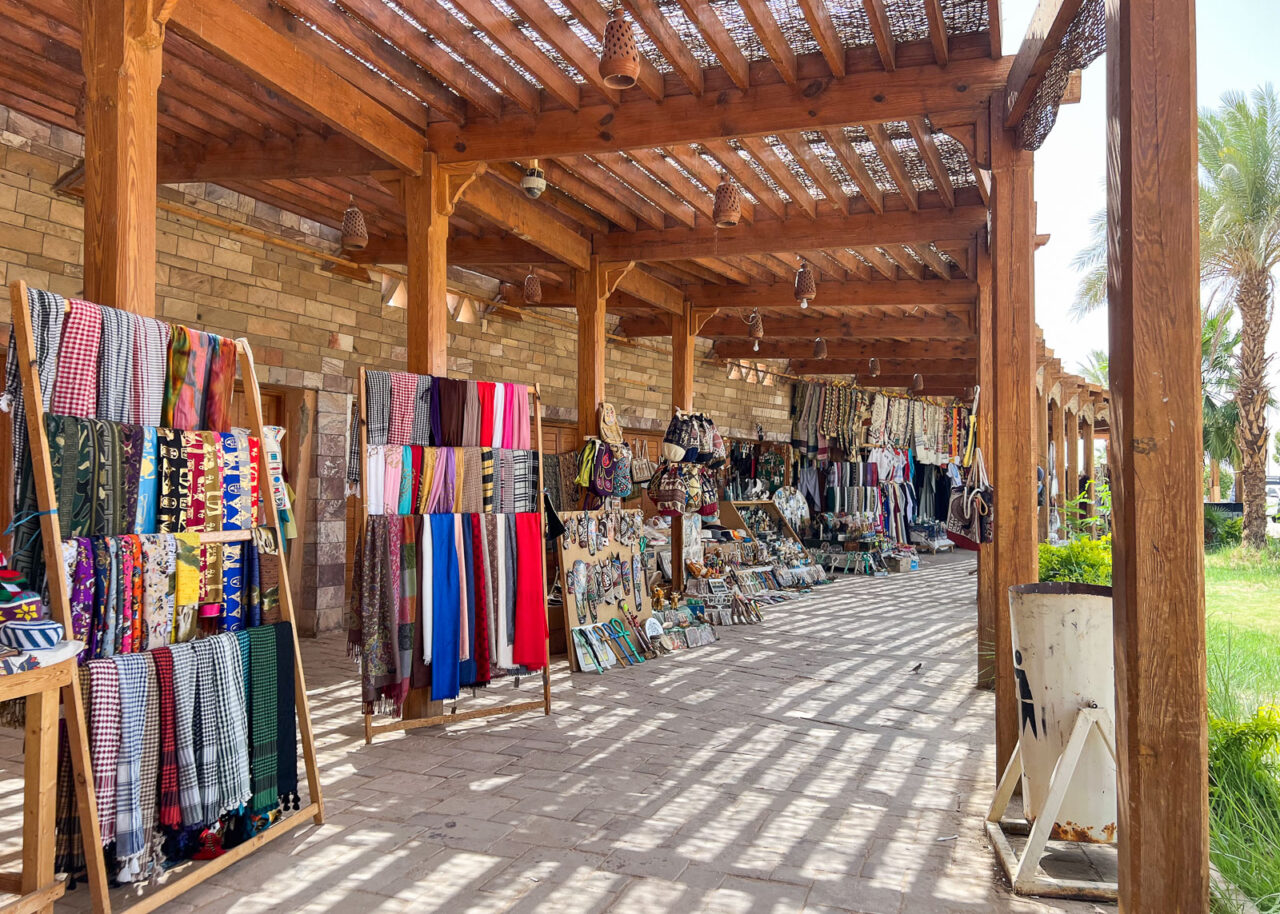
Scarves are one of the easiest souvenirs to pick up in Egypt, and you’ll see them in pretty much every market.
They come in a wide range of fabrics, colors, and patterns, from lightweight cotton to thicker woven styles. Some are more traditional, while others are clearly made with tourists in mind.
They’re also practical, especially if you’re visiting religious sites where you may need to cover your shoulders or head.
Dried Dates
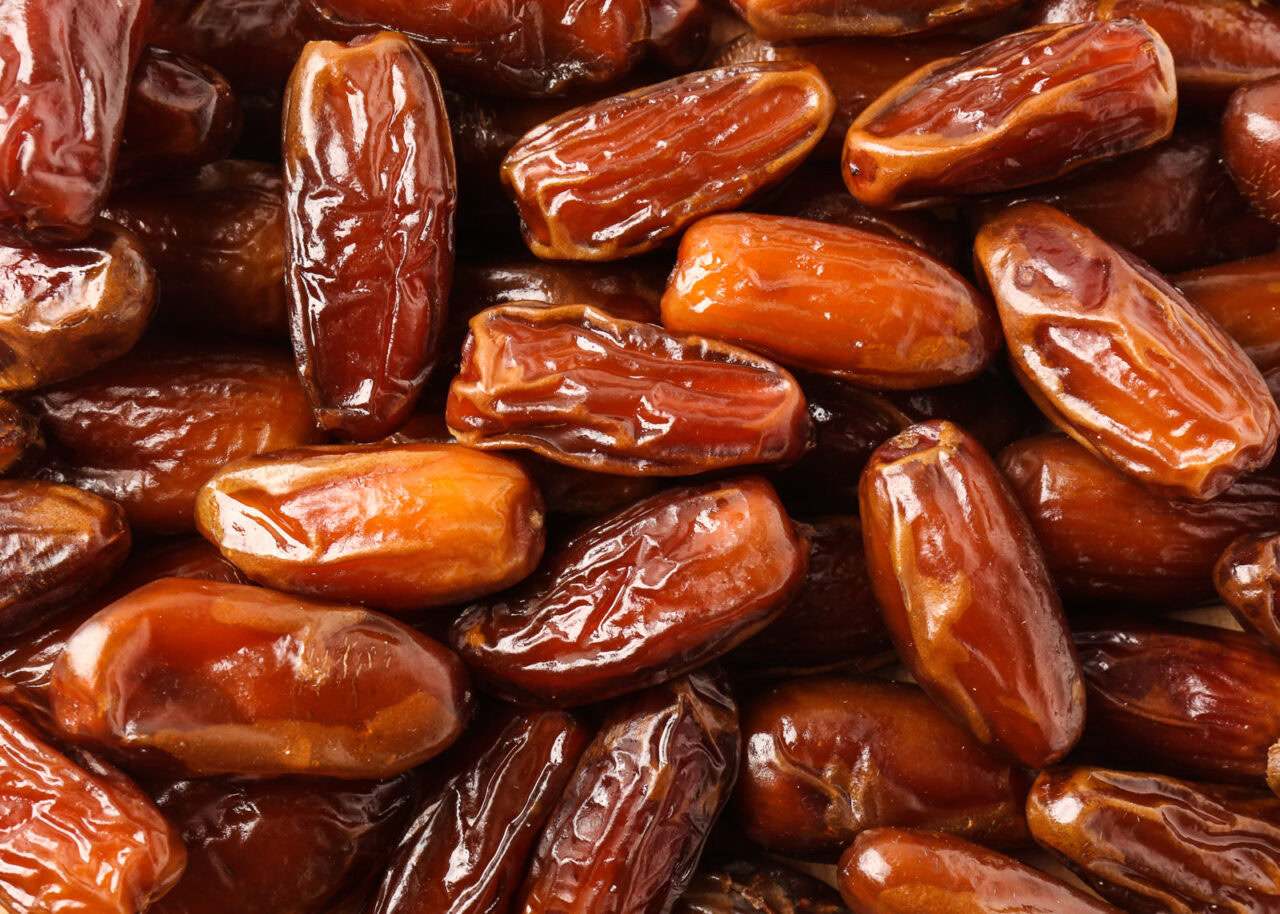
Dates are a staple across Egypt, and they’re something you’ll come across constantly while traveling.
They’re grown along the Nile and have been part of the local diet for thousands of years. The flavor is naturally sweet, with a soft, chewy texture.
You’ll find them sold in markets in different varieties, sometimes plain and sometimes stuffed with nuts or coated in chocolate. They’re easy to pack and make a good food-based souvenir.
Pharaoh Masks
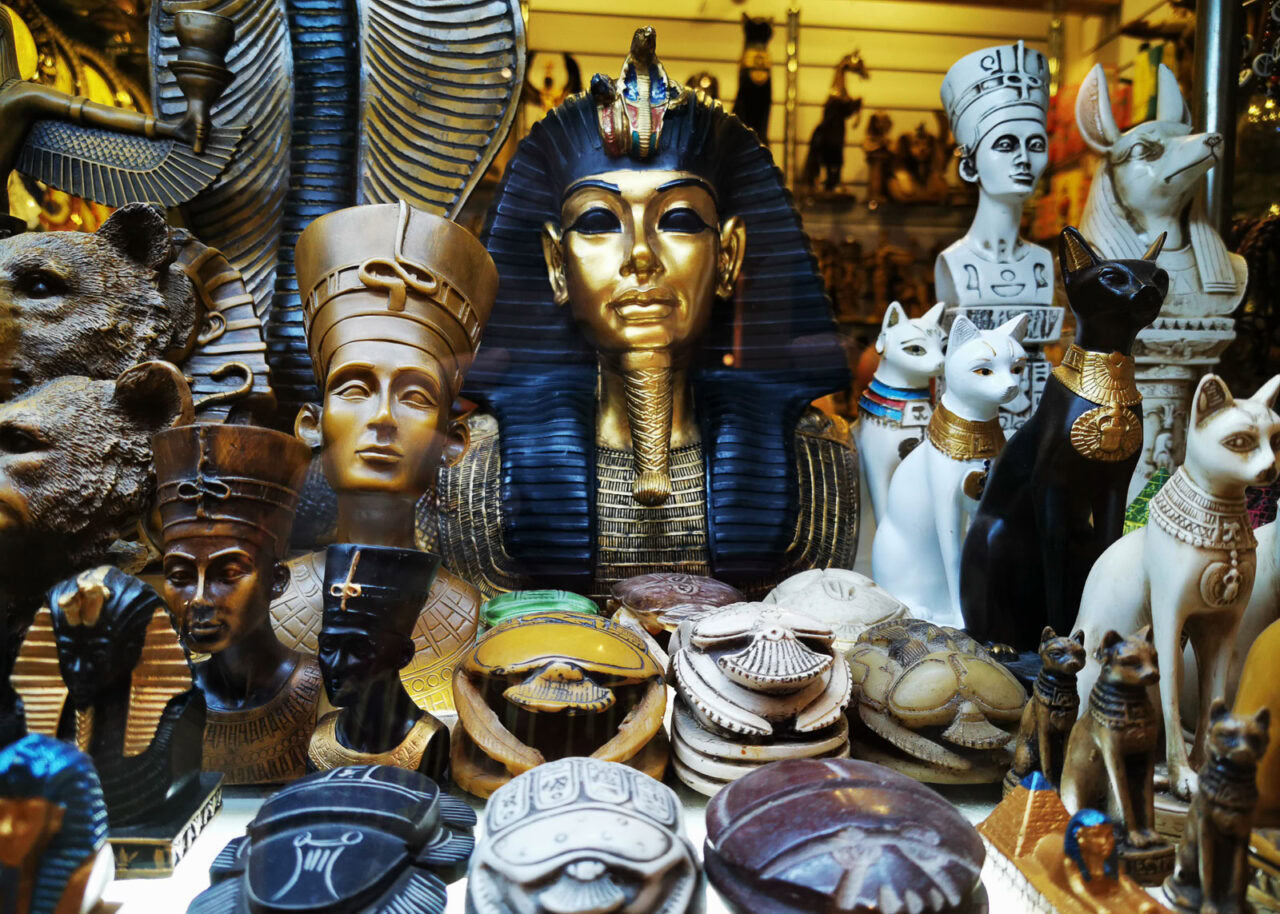
Pharaoh masks are one of the more striking souvenirs you’ll see in Egypt, often inspired by famous figures like Tutankhamun.
They’re usually made as decorative pieces, with gold tones, bold colors, and detailed features that mirror the style of ancient Egyptian art.
Some are small enough to pack easily, while others are larger statement pieces.
They’re definitely on the more dramatic side, but if you want something that really stands out, this is one of the more eye-catching Egypt souvenirs.
Ankh Cross
The Ankh is one of the most recognizable symbols you’ll see in Egypt, often referred to as the “key of life.”
It dates back to ancient Egyptian times and was used to represent life, immortality, and the afterlife. You’ll often see it in temple carvings and artwork being held by gods and pharaohs, symbolizing their connection to eternal life.
The shape is simple but distinctive, almost like a cross with a loop at the top, which is why it’s remained such a popular design over time.
As a souvenir, you’ll find it everywhere, especially in jewelry, but also in keychains and small decorative pieces.
Mother of Pearl Boxes
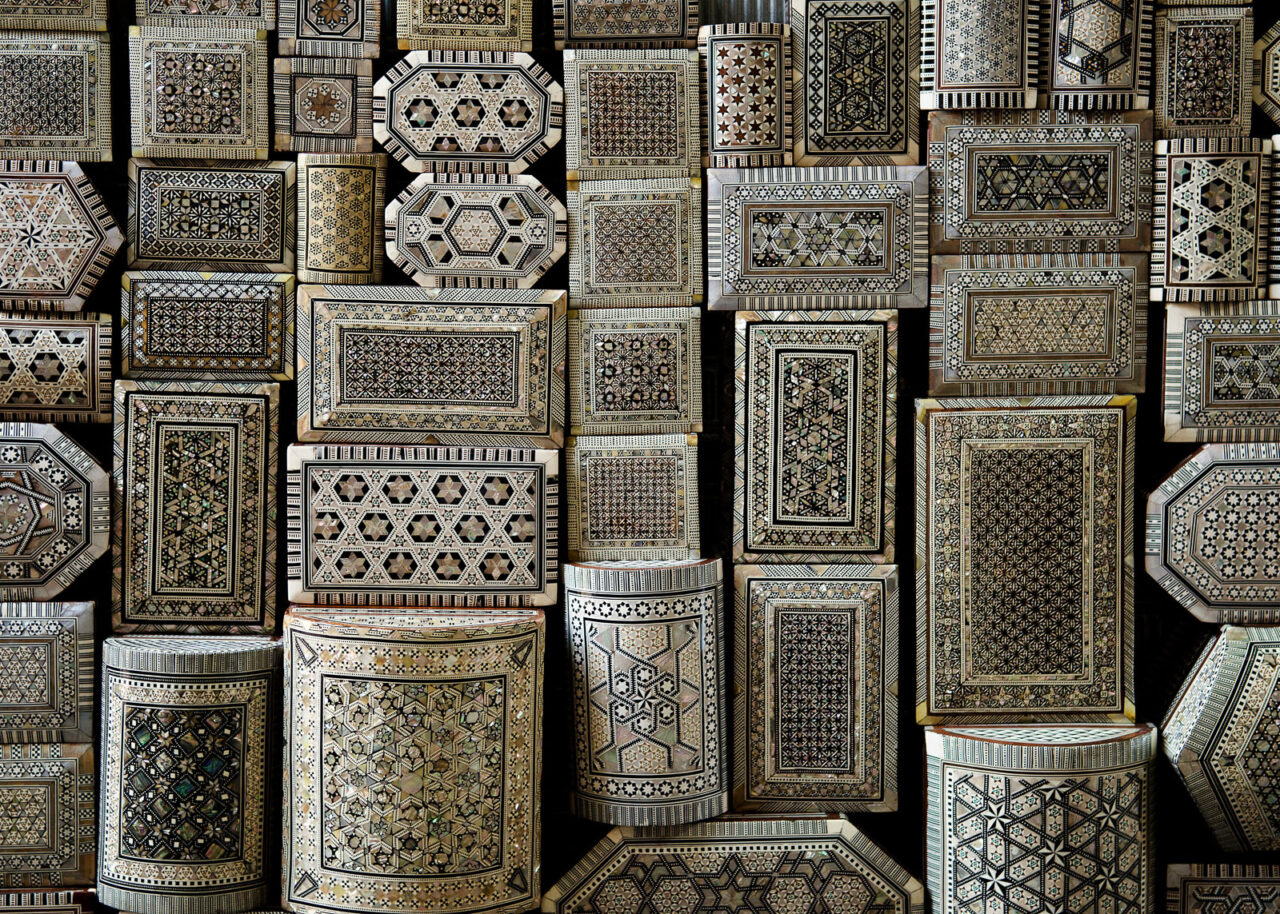
Mother of pearl boxes are one of the more decorative souvenirs you’ll come across, and they’re usually handcrafted.
They’re made by inlaying small pieces of shell into wood to create detailed patterns that catch the light. The result is something that feels a bit more refined compared to standard souvenirs.
They’re often used as jewelry boxes or small storage pieces, but they also work well just as decor.
Brass and Copperware
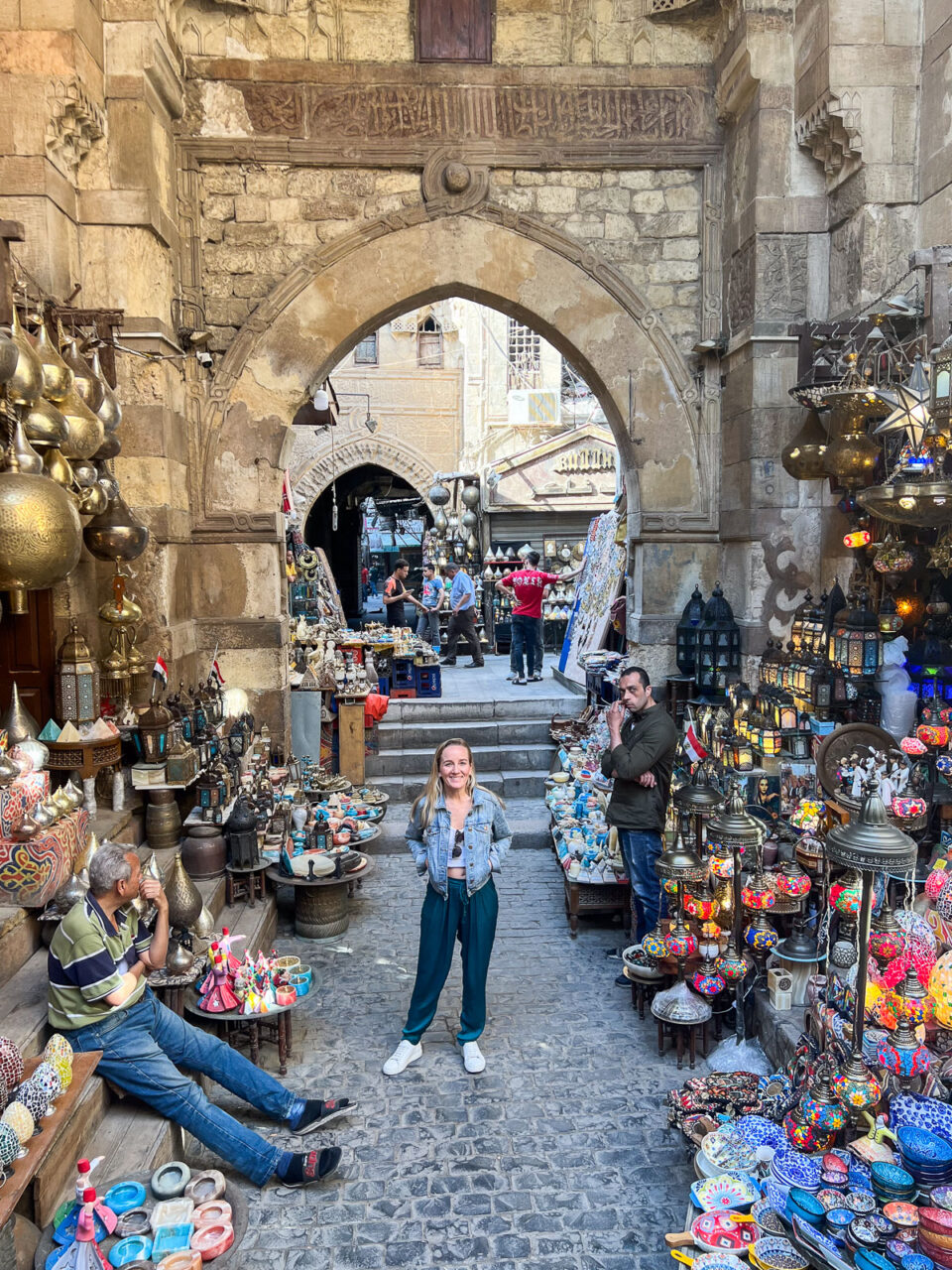
Brass and copper items are common in Egyptian markets, especially in places like Khan el-Khalili in Cairo.
You’ll find trays, lanterns, teapots, and decorative plates, often with detailed engravings or hammered designs.
They have a slightly aged, traditional look that fits well if you like more rustic or vintage-style decor.
Some pieces are purely decorative, while others are functional, so it depends what you’re looking for.
Cat Statues
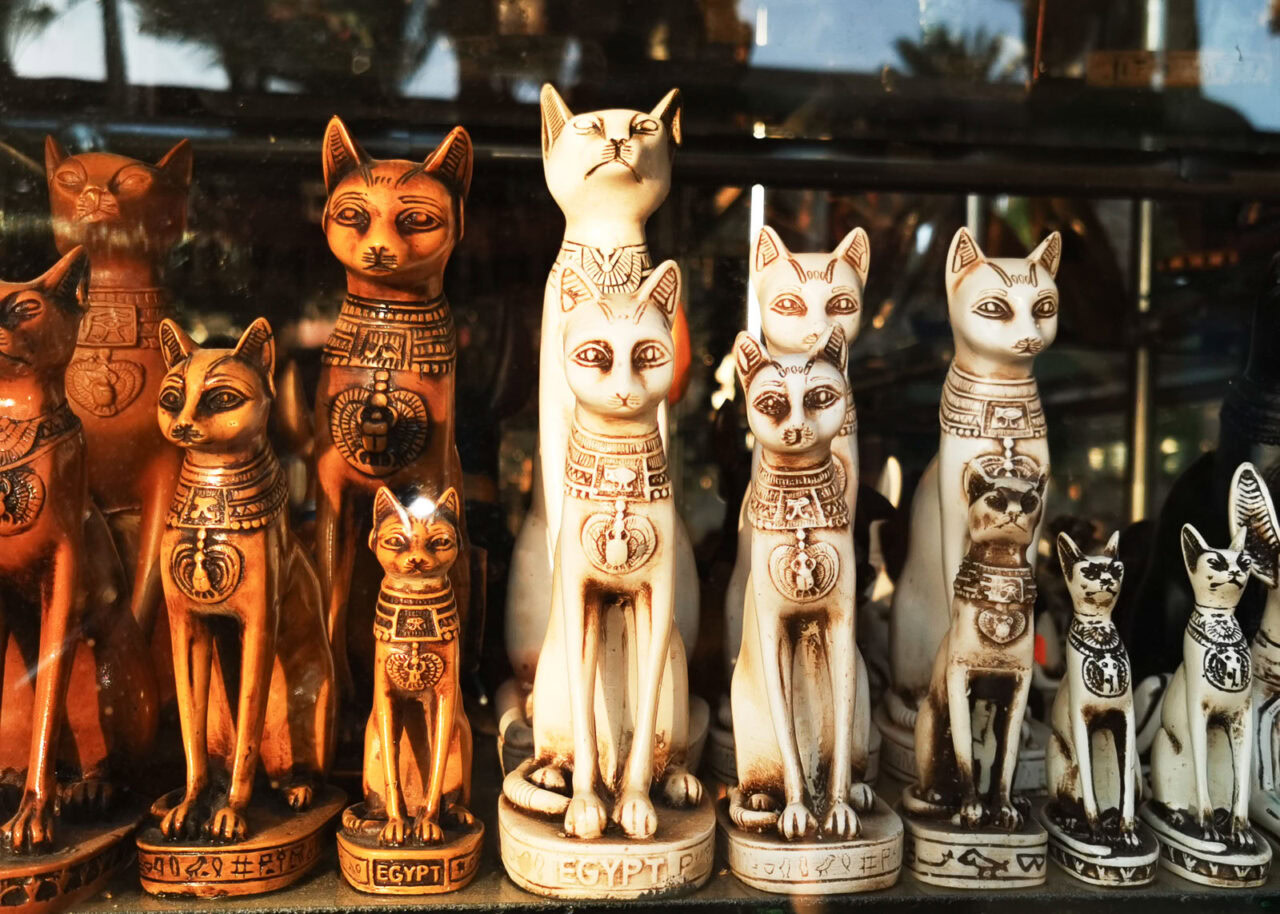
Cats were highly respected in ancient Egypt, and you’ll still see that influence today in the number of cat-themed souvenirs available.
Statues are the most common, often inspired by Bastet, the goddess associated with protection and home.
They’re usually made from stone, metal, or resin, and range from simple designs to more detailed pieces. These make great gifts for cat people.
Baklava or Knafeh
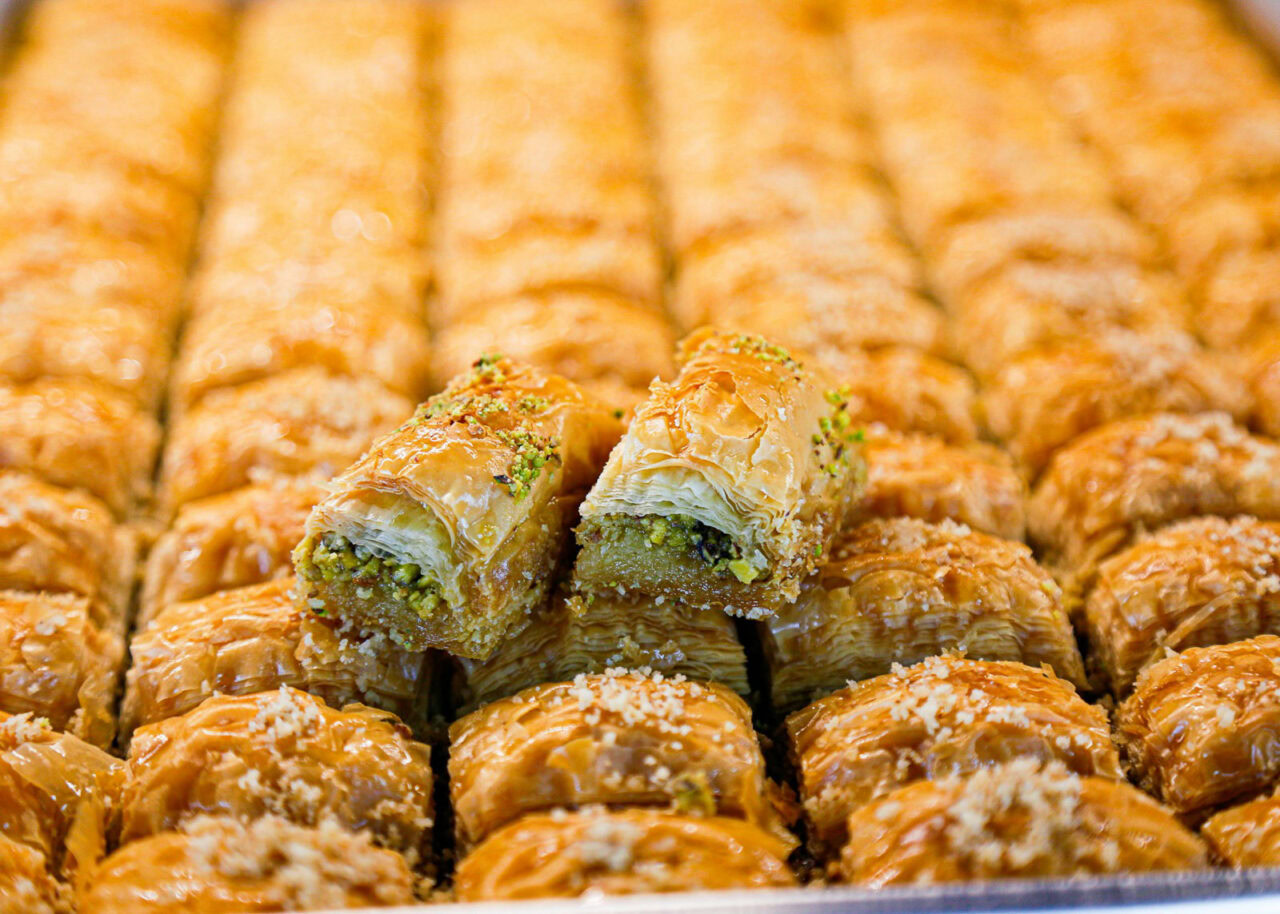
If you want something edible to bring home, Egyptian desserts are worth considering.
Baklava is probably the easiest to find, made with layers of pastry, nuts, and syrup. Knafeh is another option, with a softer texture and a sweet, slightly cheesy filling.
They’re rich, sweet, and definitely more of an occasional treat than something you’d eat every day.
Not the easiest to travel with long distances, but if you can pack them properly, they make a great way to share a taste of Egypt with friends or family.
A Final Word
If you’re wondering where to buy souvenirs from Egypt, Khan el Khalili Bazaar in Cairo is one of your best bets. You’ll also have plenty of opportunities to purchase souvenirs at all the main tourist sites, such as the Pyramids of Giza, Philae Temple, Luxor Temple and Abu Simbel. You can also purchase spices and colorful souvenirs in the Nubian Village in Aswan, or in Aswan’s main market.
